












Robert Kubica: “I’m somebody who likes extra competition in what I do.”
Looking to Valencia, do you find the circuit a rewarding one to race on? I know a lot of other drivers don’t think the same way, but I enjoy driving there. It’s quite an interesting circuit because it’s half-street circuit, half-modern circuit. The characteristics are quite similar to Canada, because most of the corners are slow speed, so you concentrate on braking stability and good traction – which should suit our car because we are strong in these areas. We run a higher level of downforce than in Canada, but you still need good aerodynamic efficiency because the speeds are high at four points of the lap.
It was expected that the R30 would perform well in Canada, but you suffered from a lack of grip all weekend. Will that be a problem in Valencia? The main difference will be with the asphalt: in Montreal, the track surface was new and very slippery, whereas I think the grip levels will be better in Valencia – but that will be the same for everybody. It’s still a street circuit, so grip levels will be low on Friday morning, but they should improve quickly throughout the weekend, especially because we will have more categories racing and putting rubber down than we did in Canada.
What is the most challenging part of the circuit in Valencia? I enjoy the first sector, because it has two chicanes where you have to jump over the kerbs, and the walls are very close. The other fun section for the drivers is the final part of the lap: they are taken flat out, or with one small lift, but you really get into the flow from one corner to another and then, for the last corner, you have to brake while there is still a lot of lateral load on the car. It’s very tricky to find your braking point for that corner, which makes it even more challenging.
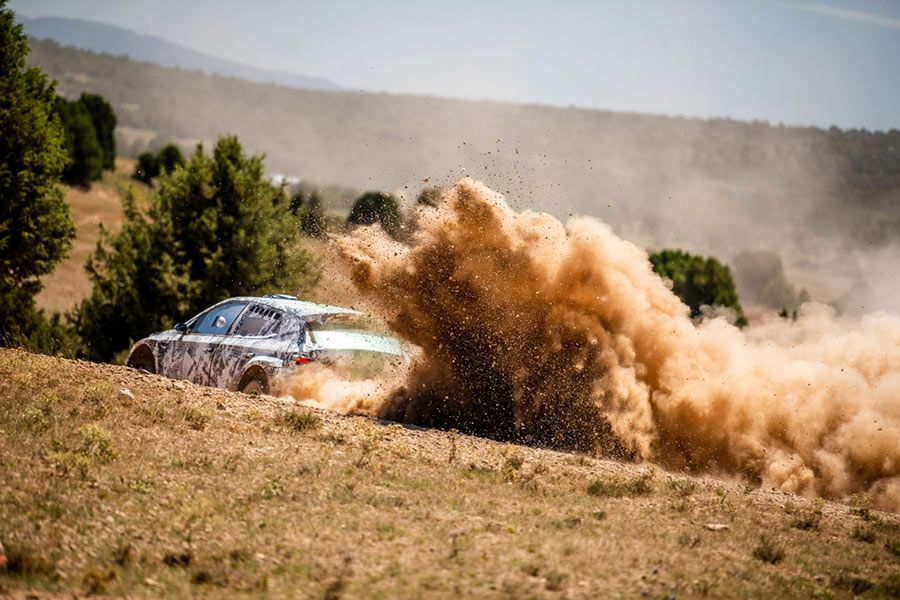
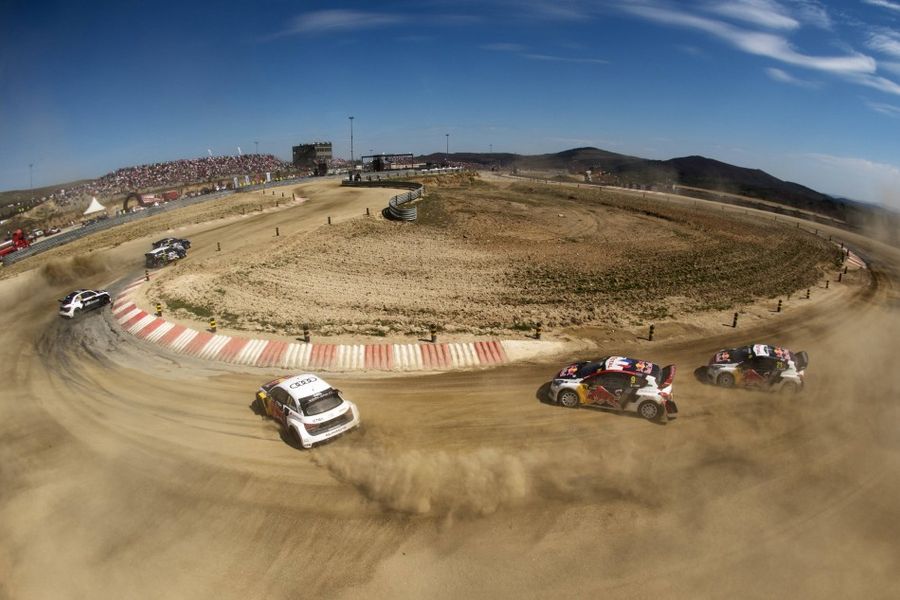
Most people spend their weekends off at home, but you were in action again last weekend, rallying in southern Italy. Tell us more about this hobby… I’m somebody who likes extra competition in what I do. It wasn’t actually my plan to go rallying during the season, but I had some problems when I competed last winter, so I had to do it more and it’s been going really well. What I love about is that you always have a question mark in your mind: when you approach each corner, you never know what’s going to happen. In Formula 1, I can predict 80 or 90% of what will happen on each lap but in rallying you can predict nothing. You go into the corner thinking “what the hell will happen now?” That’s what I enjoy most.
The team is targeting Mercedes in the constructors’ championship. Do you think you can take the fight to them this weekend? It would be good to beat everybody, not just Mercedes! The gap to the front of the field is not so big, but we still have to gain a lot of ground, and we can only do that if we keep pushing and keep working. We will have a new package on the car this weekend, and we hope that will bring us another step forward. But every team will be bringing updates, so it will depend how much they bring and how much they improve. In Valencia, anything could happen, and we need to wait and see if the order is shuffled and how we will perform compared to Mercedes.
Vitaly Petrov: “I’m focusing on what’s ahead.”
Vitaly, you had a tough weekend in Canada. What did you learn? First of all, I know I made mistakes in the race – at the start, I took a risk by moving onto the grass, it didn’t work and I was given the drive-through penalty. But it was still important to finish the race because it always gives you much more information, particularly about how to look after the tyres in different conditions. I will take that experience with me, and I will know better how to handle certain situations in the future. But the bad result is in the past for me now; it’s time to focus on what’s ahead.
Valencia is also a circuit you know from GP2, and you won last year’s feature race there. Does it hold good memories for you? Yes, of course, because I won the race there last year – and also because I know all of the tricks in terms of the braking points, the line, where you can use the kerbs and even how the tyres will perform and degrade during the race. Of course, it will be different again in an F1 car, so it will still be a big challenge to put together a good performance all the way through the weekend, but I will be starting from a better baseline than in Canada.
You also live in Valencia. Does that make it a home race for you? I’ve been living in the city for three years because it’s where my GP2 team was based, so I know everything here. It’s not like having a home race in your own country, in front of your people, but it’s a good feeling because you know the place already, you feel comfortable there and feel good. But because we don’t have the French Grand Prix this year for Renault, I think the next race in Silverstone will be more like a home race, because it’s so close to the factory in Enstone.
What are your targets for the next race? I prefer to keep my feet on the ground and concentrate on my job rather than setting targets, but I think it’s going to be quite an interesting race. We will have a new package for this race, so it will be interesting to see how it improves the car and how I need to adapt my driving style to it. We saw that Force India were quick in Canada, so we need to make sure that we can beat them, and try to fight with Mercedes; this is the most important thing for the team.
Alan Permane: “I’m optimistic of a strong showing this weekend”
Alan, looking back to Canada, the team came away with six points for Robert, but was left feeling rather frustrated… We did come away disappointed and feeling that we probably didn’t get the most from the weekend – and it’s the first race this season where we’ve felt that. Obviously a large part of our frustration was down to our tyre management because we suffered with such high degradation rates, which held us back and meant we couldn’t meet our expectations.
Still, it must be encouraging to score points despite having a difficult weekend… Yes, it’s reassuring to come away with a reasonable result even though things didn’t go our way. It’s the first time this year that we’ve really seen the tyres play such an integral role in the strategy because nobody was able to follow the usual one-stop routine. While we enjoyed the challenge of trying to make the strategy work, it’s just frustrating that some teams got more out of it than us.
Let’s talk about Vitaly - what should his focus be for Valencia? I think he should maintain the same approach that has worked for him so far this year. In Montreal he did a very good job of learning the circuit and improving the car through free practice. Under the current regulations, though, qualifying is probably the most critical part of the weekend. He qualified 14th in Canada, which put him in the midfield battle and led to the problems he had in the race. Vitaly has already shown that he has the speed to qualify and race in the top 10, like we saw in Turkey, so it’s now a question of steadily improving his consistency.
The team will have some upgrades this weekend. Tell us about those… We’ve got quite a nice upgrade coming, with a new front wing and a new floor, which we believe will take us another step further forward.
Can you remember a season where the pace of development has been so high? We have certainly seen an incredible rate of development this year. If we take the gap to pole position as a measure of how much we’ve improved, we’ve seen the gap steadily reduce race by race as we’ve developed quicker than some of our competitors. And with the updates we have planned for this weekend, that trend will hopefully continue.
What about the team’s battle with Mercedes – do you expect that to rage all season long? I hope it doesn’t because I’d like to see us eventually move clear of them. At the moment I feel we’re slightly ahead and it was encouraging to see Robert qualify ahead of both Mercedes in Canada, especially Rosberg who was on the option tyre. But we’re well aware that we shouldn’t underestimate Mercedes because they are pushing just as hard as us – and don’t forget that they are the reigning world champions, too. As it stands, we’re 29 points behind them in the constructors’ championship and our target is to try and overhaul them as soon as possible.
Tell us about the challenge of the Valencia circuit and how you expect the car to perform there? The circuit has all the typical street circuit characteristics because it’s not used throughout the year and will be very dirty at the start of the weekend. The car went very well at Monaco, the last proper street circuit, so we’re optimistic of another strong showing this weekend. We will have the same tyre compounds that we had in Canada, but I don’t expect anything like the same problems we encountered with degradation and tyre management.
Robert Kubica’s guide to Valencia
From my point of view I think Valencia is quite an interesting track because it’s partly a street circuit and partly like a modern F1 circuit. I enjoy driving there, but I know that a lot of other drivers don’t think the same way.
It’s quite like Canada in terms of set-up because you need to concentrate on braking stability and traction – and because most corners are low speed, aerodynamics and downforce are not as crucial. However, you still need an efficient car because there are four places on the lap where you reach quite a high speed. The track is very smooth with a lot of run-off and I’d actually prefer it if there were less run-off areas and a few more bumps – then it would feel more like a proper street circuit
The first turn after the start is not really a corner: it’s a flat-out easy kink but then as you brake for turn two the track suddenly gets narrow towards the apex, so you have to make sure you get the right line into it. You can make up some time going into the corner and at the start there’s a good opportunity to gain one or two positions under braking.
Turns nine and ten are where you cross over the swing bridge. When we went to Valencia for the first time in 2008 there was quite a big gap between the racetrack and the bridge – it was a big bump. Initially there were some concerns about the gap damaging the tyres, but from a driving point of view you don’t really feel anything. There are a couple of long straights heading into tight corners, such as the hairpin at turn 17, which can lead to the possibility of overtaking. But actually if the driver in front of you doesn’t make a mistake, then it’s quite difficult. Also because it’s not a permanent circuit, only the racing line gets clean and because it’s so dirty off-line it’s very hard to make a successful pass to overtake.
My favourite section is the high-speed sequence towards the end of the lap where you brake as you’re turning into the final corner. You often get the front wheels locking and it’s quite tricky because you have some bottoming too.
The development race
Upgrades, updates, developments - call them what you want, they mean performance in F1 and the development race off the track is just as fierce as the battle on the track. In fact, the intensity and rate of progress has snowballed in recent years with teams now forced to crank the development handle all season long to remain competitive. Already this season, the development push has seen over a second of performance added to the R30 since the first race of the year in Bahrain.
“As the years have gone by, teams have realised that the in-season development battle is as important as the new car design,” confirms Technical Director James Allison. “We’re basically putting a new package on the car for each race, and the size of package is equivalent to what we would have added every three or four races in years gone by. All the teams are doing this so we have to maintain that high level of intensity throughout the year, which means people are working harder and working to timescales that we would never previously have contemplated. For example, the front wing we will run this weekend in Valencia is already the eighth version this year, and it’s only race nine.”
So why has this new wave of development intensity set in? Well, a contributing factor is undoubtedly the new technical regulations introduced at the beginning of last year. We may be eighteen months down the road, but the regulations remain sufficiently young to allow significant gains to be found from one week to the next, especially in the wind tunnel. Plus, with engine development frozen, the burden of finding additional performance falls almost entirely on the chassis side of the team.
“Because all the cars on the grid are improving at an incredible rate, we’ve had to adopt a philosophy of adding each improvement to the car as we find it, rather than saving parts up for a big update,” says James. “The moment you find an improvement, every second that passes when it’s not on the car is lost performance at the track.”
Churning out those developments is the work of the factory staff, the unsung heroes who have been working flat out behind the scenes since the R30 car-build began last November. “The workload is felt at all levels in the team,” confirms James. “The factory takes up the continuous, unrelenting pressure of delivering the new parts, and the race team pick up the baton at the track. The factory’s response to the challenges we face is always fantastic, but there’s a limit to the amount of work you can expect from people. So you need to strike the right balance to keep the development rate high without overcooking people’s workload.”
Ironically this new age of technical productivity has coincided with a significant reduction in track testing. Rather than pounding around Barcelona every other week, the team is now reliant on an array of factory tools to recreate the track back at base.
“Obviously CFD and the wind tunnel are incredibly useful for predicting how our aero packages will work at the track. These tools predict the size of the gains that eventually unfold at the track within errors that are substantially less than 0.5% of the total downforce on the car. For the mechanical parts we rely on computer simulations, which we then validate on our chassis rig,” confirms James. “We also have a suite of endurance rigs that can subject components to loads and forces to make sure they can cope with the F1 environment. These tools allow us to turn up at the track confident in the knowledge that our latest parts are reliable and will perform as we expect.”
As the year unfolds, the factory also has to absorb the design of the 2011 car in tandem with the development the current car. “Throughout the year the percentage of the resources that you add to the new car increases at the expense of the current car,” concludes James. “It’s always a difficult choice to decide how much to invest in the future, but we’ve been working on the 2011 car since January and still managed to sustain a very high rate of development on the current car, which is a real testament to the hard work of everybody in the Renault F1 team.”