









Electric cars steal the show at this year’s event.
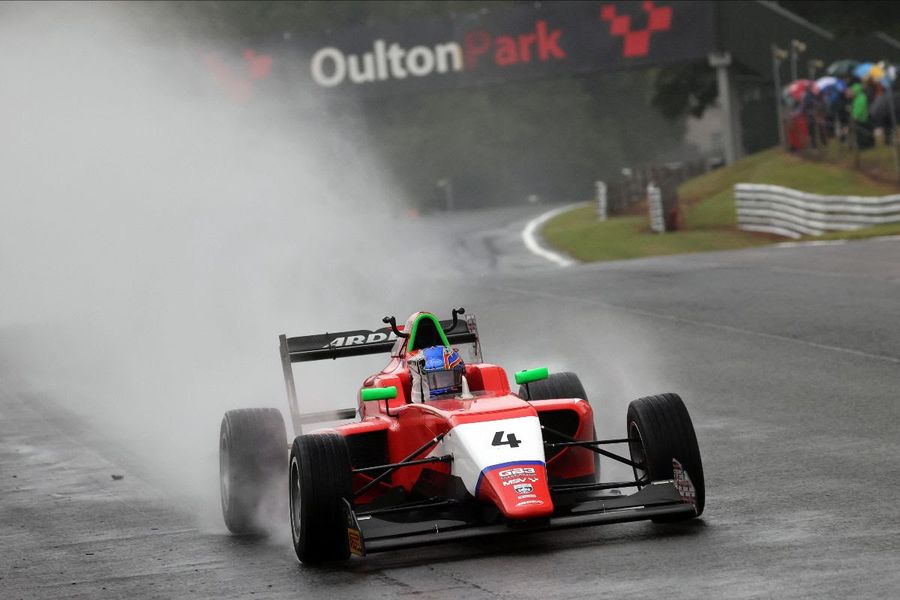
A fleet of electric cars designed and built from scratch will be one of the rip-roaring exciting highlights at this year’s Formula Student (FS) competition. The single-seater racing cars will all feature in a low carbon category, Class 1A, at the event run by the Institution of Mechanical Engineers on 15-18 July at Silverstone.
The Class 1A category, which is sponsored by the UK's Centre of Excellence for low carbon and fuel cell technologies, Cenex, will also feature the first ever petrol cars in the category, built by City University London, and Lund University in Sweden. Class 1A challenges students to develop new and novel powertrain technologies which many of us could be using in the near future in the drive to combat carbon emissions. With the recent news that Formula One is looking to make significant emission cuts in the next few years, Class 1A teams will already be developing the skills needed for the ‘green’ cars of the future.
Class 1A has been running since 2008. Cars can be powered by any source and are judged on sustainability rather than cost, in addition to design and business presentation. Judges will look at the sustainability of the design, how much energy is used and the carbon dioxide (CO2) released during the manufacture of the car. The petrol car run by City University has an engine size of just 250cc instead of the 600cc in the main Class 1 category making it much more efficient to drive.
Switzerland, the Netherlands, Austria, Spain, Germany and Sweden, as well as the UK are all entering Class 1A cars. The average Ford Fiesta emits around 130gm of CO2 per km, so greener technologies on display at FS are often seen as future concepts for low carbon vehicles we will all be driving.
There will be more than 100 teams from all over the world entering FS this year and on Saturday and Sunday they will all compete in thrilling dynamic events such across Acceleration, Skid Pad, Sprint and Endurance.
To ensure all cars are measured equally, the six electric cars in the competition will have their electrical consumption monitored and the amount of CO2 used to produce a kilowatt of electricity will be calculated based on this. The current and voltage passing between the battery and the drive motor will be measured by an electric meter, which will be fitted to all electric cars for the first time in the competition’s history. This will also capture data which will be analysed to see how to make it possible for low carbon vehicles to run alongside conventionally powered vehicles in future years.
Richard Folkson, Head Judge at FS, said: “Over the past two years we have seen the Class 1A cars grow dramatically in numbers of entries and the capability of the technology. It cannot be long before we see low carbon cars in this class giving the conventional Class1 cars a serious challenge for overall leadership in the competition – it may even happen this year!”
The use of sustainable materials which have low environmental impact will also be considered. This year the University of Central Lancashire’s Class 1A team is utilising basalt fibre throughout the manufacturing as a more sustainable material in comparison to other composites.
Nick Clare, Programme Development Manager at Cenex said: “Cenex is extremely pleased to continue its partnership with FS Class 1A in 2010. As the UK Centre of Excellence in low carbon and fuel cell technologies, Cenex is keen that young engineers appreciate the relevance of Class 1A and the importance of these technologies to the future of the UK low carbon automotive sector. We are also keen to demonstrate that, despite the recent economic recession, the UK continues to provide exciting prospects for automotive engineers of all ages particularly in the areas of low carbon automotive design, research and development.”
The City University team hope to enter its car as a flywheel hybrid, which recovers mechanical energy from braking which would otherwise be wasted as heat generated by friction, into next year’s competition and become the first one of its kind to enter Formula Student. This year the team will bring the flywheel as a static display.
Sean Canty, Class 1A Team Leader at City University London, said: “We’ve entered the Class 1A category, as the next generation of engineers we have a responsibility to work towards systems that reduce emissions and operate as efficiently as possible. Sustainability has to be a vital consideration for engineers and we’re a part of that.”
FORMULA STUDENT CLASS 1A ENTRIESUniversity / FuelCity University London PetrolEindhoven University of Technology, Netherlands ElectricETH Zurich, Switzerland ElectricLund University, Sweden PetrolOxford Brookes University ElectricTU Graz, Austria ElectricUAS Zwickau, Germany ElectricUniversitat Politecnica de Catalunya ETSEIAT, Spain Electric & PetrolUniversity of Central Lancashire E85University of Hertfordshire ElectricUniversity of Nottingham E85