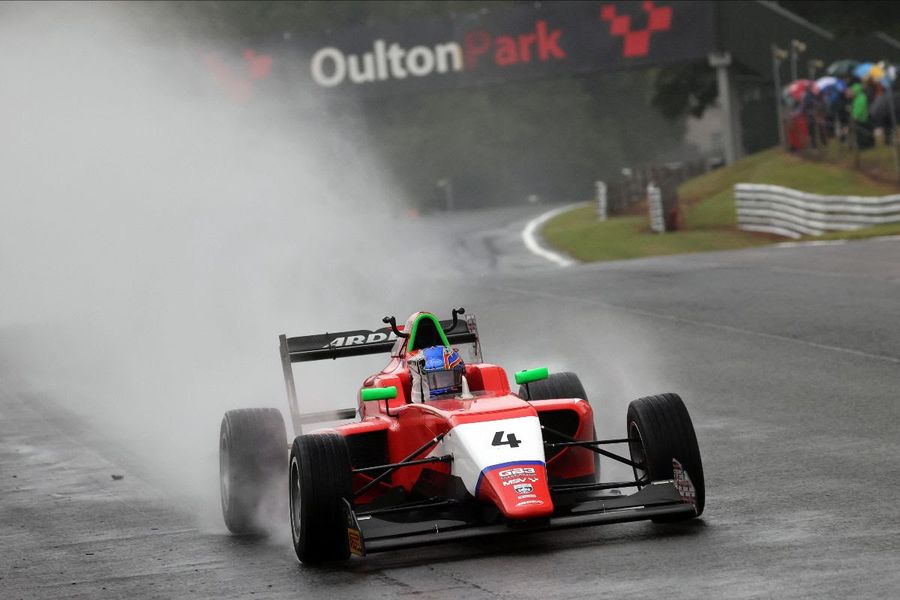











The Institution of Mechanical Engineers’ Formula Student (FS) 2010 event is set to become the world’s first event of its kind to utilise innovative technology which measures and collates data from cars. FS is Europe’s biggest student motorsport event and will run from 15-18 July at Silverstone, Northants.
Special boxes will be fitted in 11 cars in the low carbon, Class 1A, category which will capture and record how energy efficient they are for judging and future analysis. More than 3,000 people from all over the world are expected to converge on Silverstone for the competition.
All teams competing in this category will be fitted with a logging system by cutting edge automotive technology firm, Racelogic in Buckinghamshire. This will comprise of a Racelogic Video VBox, an in-car video GPS data-logger which measures performance including speed, acceleration, distance, time and position. The multi-media element of the system means students can see and analyse performance all at once. Energy company E.ON are sponsoring the concept.
In addition, the seven electric cars in the Class 1A category will be fitted with an electric meter*, which will measure the current and voltage passing between the battery and the drive motor. The amount of energy consumed during the endurance event will be calculated and used in judging.
The Class 1A category challenges student engineers to develop new and novel powertrain technologies, often designing and building cars completely from scratch. The average Ford Fiesta emits around 130gm of CO2 per km, so greener technologies on display at FS are often seen as future concepts for low carbon vehicles we will all be driving.
The data collated at FS 2010 will be analysed to see how to make it possible for alternative powered vehicles to run alongside conventionally powered vehicles in the future.
This year’s Class 1A category is made up of teams from Switzerland, the Netherlands, Austria, Spain, Germany and Sweden, as well as the UK. Cars in this category are judged on sustainability rather than cost, in addition to design and business presentation. Sustainability of the design, which includes how much energy was used and the CO2 released during the manufacture of the car, will be considered.
Jon Hilton, FS Chairman, said: “The whole life-cycle approach to engineering, which is taken in the Class 1A category, will be crucially important in the future and FS entrants will already be familiar with this way of working. In the areas of low carbon transport and energy generation, the UK faces some serious challenges and it will be up to these young people to deliver appropriate solutions.”
Keith J Trilloe, Head of Engineering Proposition at E.ON UK, said: “E.ON is leading the way in bringing low carbon vehicles to the streets of Britain and we hope that by supporting the introduction of new technology like the emissions monitoring 'black boxes', that students will gain a better insight into the low carbon future of transport."
Julian Thomas, MD of Race logic, said: “Driver and vehicle analysis will be vital in improving performance for the new generation of low carbon vehicles. Our VBOX GPS data-logging range is used for testing by almost every automotive manufacturer in the world, and we’re pleased to be involved in helping budding engineers challenge preconceptions about low carbon cars by enabling them to use Video VBOX.”
FORMULA STUDENT CLASS 1A ENTRIESUniversity FuelCity University London PetrolEindhoven University of Technology, Netherlands ElectricETH Zurich, Switzerland ElectricLund University, Sweden PetrolOxford Brookes University ElectricTU Graz, Austria ElectricUAS Zwickau, Germany ElectricUniversitat Politecnica de Catalunya ETSEIAT, Spain Electric & PetrolUniversity of Central Lancashire E85University of Hertfordshire ElectricUniversity of Nottingham E85There will be over 100 teams from all over the world entering FS this year, and on Saturday and Sunday they will all compete in thrilling dynamic events such as Acceleration, Skid Pad, Sprint and Endurance. FS challenges the next generation of engineers to drive a single-seater racing car they have designed and built from scratch. The aim of the competition is to help students develop academic, vocational and practical engineering skills and training, considered essential by industry.
*The electric meter is not manufactured by Racelogic