












The GP3 series drivers – who have been equipped by Pirelli since 2010, one year before the renowned Italian firm started supplying Formula One – have had their final taste of the tyres that they will use before the season starts in Spain on May 12.
The 26 drivers all tested their identical Dallara cars for two days at Silverstone using the P Zero GP3 hard compound: the same tyre that was made available at the most recent test in Barcelona. The wet tyre was also brought to Silverstone in case of rain. Each car was allocated five sets of hard tyres and three sets of wet tyres for the two-day test.
Pirelli makes three compounds of 13-inch P Zero tyre for GP3 – hard, medium and soft – but only one is nominated for each race. There is also one type of wet weather tyre. During each race weekend every driver is provided with three sets of slick tyres and two sets of wet weather tyres (if they are needed).
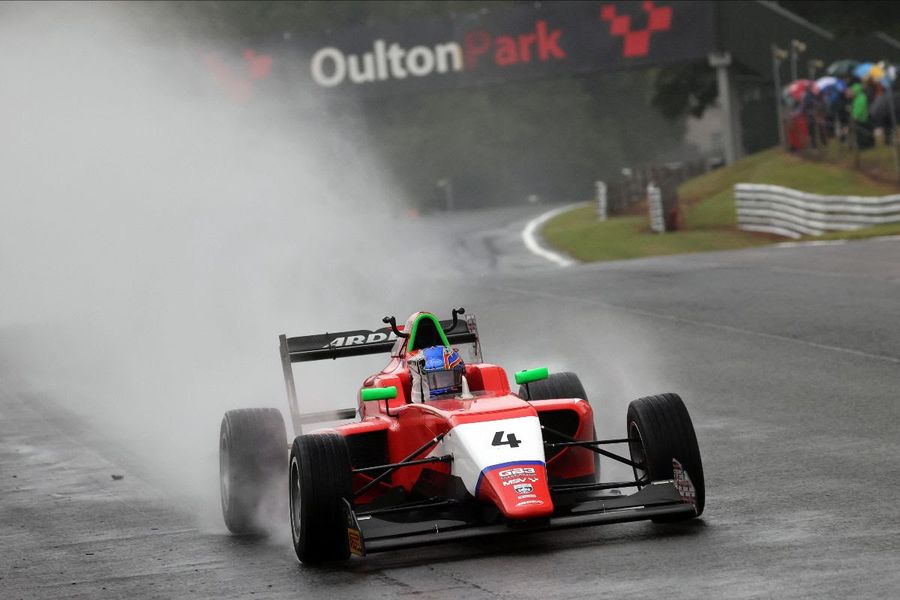
Some typically British weather awaited the drivers on the opening day at Silverstone, with strong winds and rain at the end of the afternoon. In the morning, the teams concentrated on short runs of five to eight laps as they learned to warm up the tyres effectively in cold track temperatures – which can lead to graining if the warm-up process is not carried out properly.
General testing work continued in the afternoon, and although the majority of teams made a late switch to a wet-weather set-up, they were not finally able to run on the Pirelli GP3 rain tyre due to a red flag shortly before the session finished at 5pm.
New Zealander Mitch Evans set the fastest time for MW Arden, with a benchmark of 1m50.276s in the morning.
The drivers eventually got to use the wet tyre on the second day at Silverstone, the home of the British Grand Prix and round four of the GP3 Series in July. Having started off with wet weather, the track began to dry out halfway through the morning, allowing drivers to move onto the hard tyre once more, in cloudy and windy conditions.
Temperatures rose in the afternoon, and teams carried out race simulations for the first time, as well as pit stop practice.
Once again it was Evans who was fastest on day two, with his time of 1m50.150s marking the quickest lap of the entire test.
Pirelli’s racing manager Mario Isola said: “It was clear to see that the GP3 drivers had fully taken on board all the lessons they had learned from the previous tests in Estoril and Barcelona, enabling them to maximise the potential of our tyres. This was especially evident in the way that they all handled the tyre warm-up process, which is one of the keys to extracting the best performance from the tyres at every level of racing. Despite the cool and challenging conditions of Silverstone, our GP3 tyres showed both durability and speed, with the hard compound delivering peak performance over approximately 15 laps before dropping off, as we have designed it to do. This will help the GP3 drivers to learn as much as possible about tyre management, which is an essential skill that they will need to progress their future careers. We’re pleased too that the drivers had the chance to try out the rain tyres as well for the first time this year, allowing them to experience a very wide range of conditions. Having gone from the wet tyre to the hard tyre they were able to generate plenty of performance and grip despite the changeable conditions.”
For the first race of the year in Barcelona, Pirelli’s hard compound tyre has been nominated. For the second race of the season in Monaco, the GP3 drivers will use the soft P Zero tyre.