












Six Flat-Out Hours at Second Fastest Track Pushes Athletes Forward
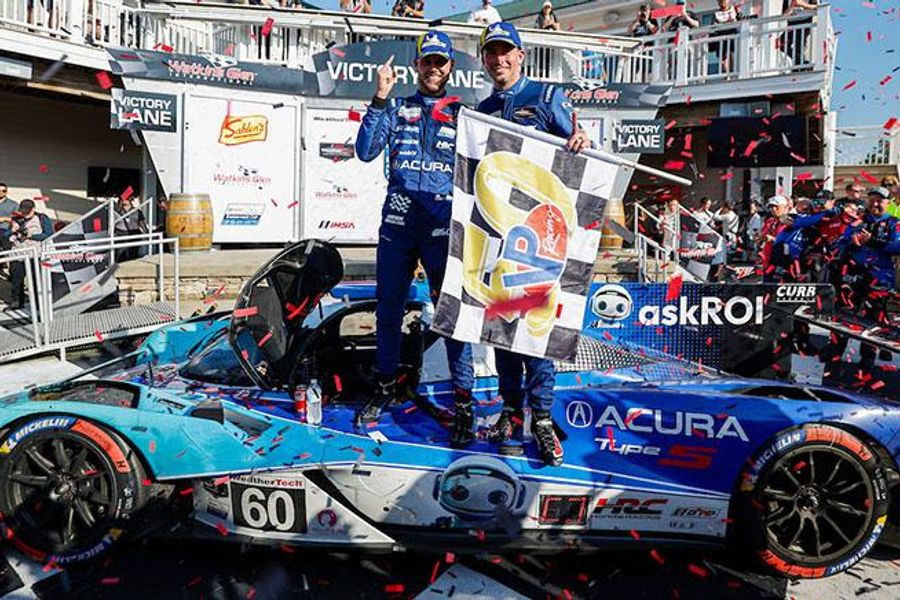
The Sahlen’s Six Hours of The Glen at Watkins Glen International joined the ranks of major endurance sports car races in 1968, and since 2012, has settled into a late June/early July slot on the international calendar, just after the 24 Hours of Le Mans.
The IMSA WeatherTech SportsCar Championship’s transition from Spring into Summer also includes the Chevrolet Detroit Sports Car Classic, which makes June an extremely busy month for full-time IMSA competitors who also participate at Le Mans. It also means there is sometimes only a one-week gap between Detroit and Le Mans, or between Le Mans and Watkins Glen.
It helps to have as much recovery time as possible before Watkins Glen after Le Mans, and the two-week break was welcomed by many since the two races ran on consecutive weekends in 2024 and ’25. Le Mans is a grueling affair spanning a whole week from the test day through race day along with a high volume of promotional activities and pageantry.
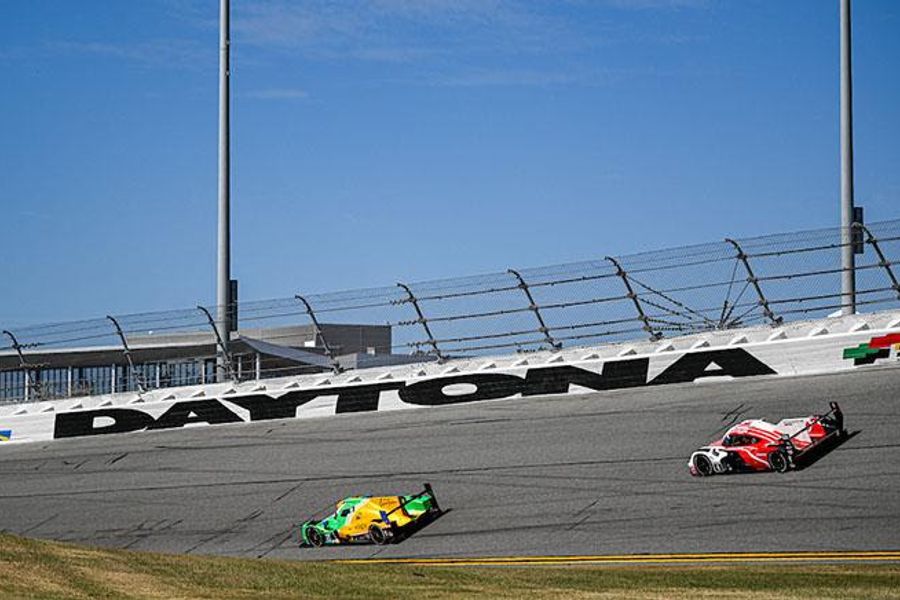
Watkins Glen International features just 11 corners (and a “Bus Stop” chicane) spread over 3.4 miles, creating the second-highest average lap speed (a 2025 overall pole speed of 133.685 mph) on the IMSA schedule where Grand Touring Prototype (GTP) cars currently run. Only Daytona International Speedway’s road course - which incorporates long sections of that track’s famous banking and tri-oval – is faster, and by less than 3 miles per hour (2026 pole speed of 136.281 mph).
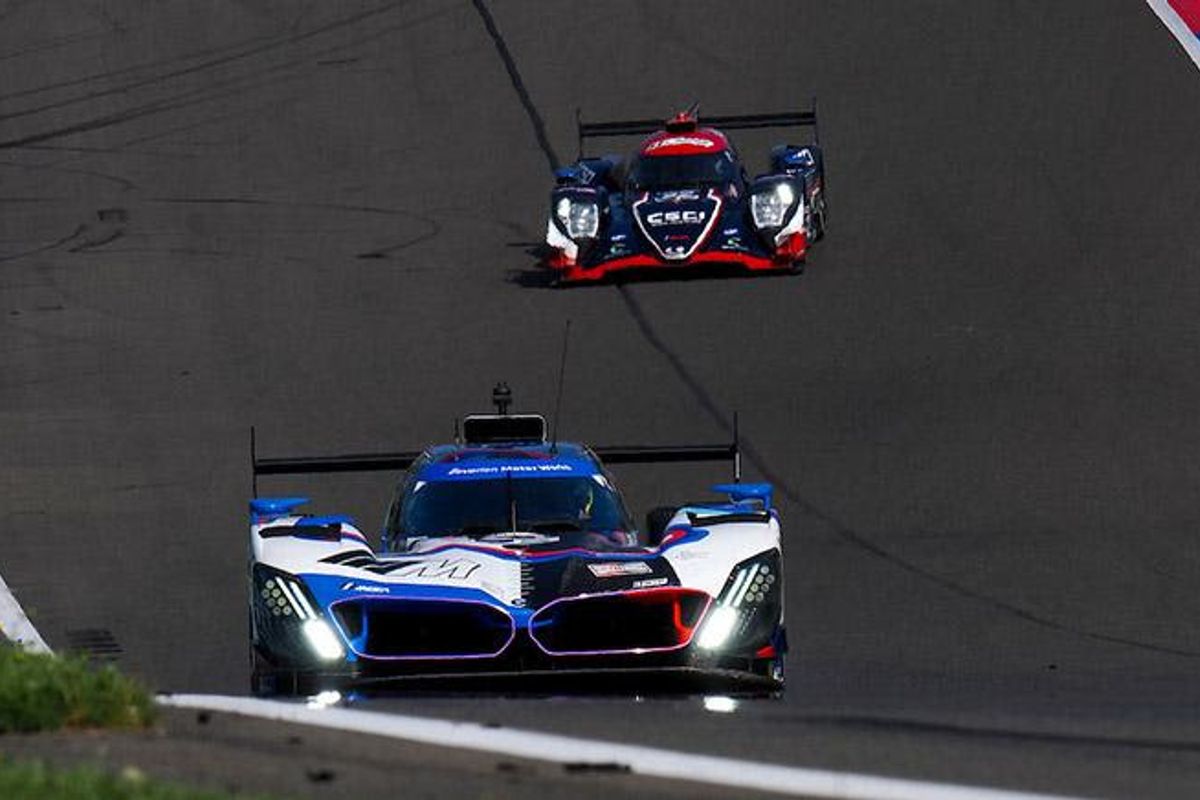
“Watkins Glen is the most physical race of the year,” stated Philipp Eng, who co-drives the No. 25 BMW M Team WRT BMW M Hybrid V8 with Marco Wittmann in the GTP class. “It’s very high G-force overall - in the first chicane, in the corner after - and it’s just high speed and full commitment. That makes it not only physically challenging, but also mentally because you’re always traveling at very high speeds. You know that you’re only spending time in high-speed corners.
“I like the challenge. It’s one of the best tracks on the calendar, but also the most challenging in any aspect.”
Eng related how he was “absolutely done” physically after completing an evaluation test for Michelin’s new-for-2026 tires the day after the ’25 Sahlen’s Six Hours. That prompted a classic response from Ricky Taylor, who was on the same conference call with reporters.
“I think a tire test at Watkins Glen sounds brutal!” Taylor exclaimed. “You’re doing multiple long runs. When you’re just on your own and you’re pounding laps, it's exhausting. The intensity of the race, as well, is a really hard one. Being six hours, it’s more sprint race than endurance race, because everybody's pushing for the entire six hours.
“Generally, the way the strategy usually works is somebody will start and finish,” continued Taylor, who shares the No. 10 Cadillac Wayne Taylor Racing Cadillac V-Series.R with Filipe Albuquerque. “One lucky guy gets just the middle stint, and he’ll have a pretty easy day. But the guy who starts and finishes starts with a lot of intensity, gets a very short break, and at Watkins, you’re getting out very tired. Then you’re getting back in an hour and a half or two hours later, to go do the same thing again. That second stint can be really brutal.”
The Sahlen’s Six Hours is uniquely stressful for drivers in all of IMSA’s four classes – GTP and Le Mans Prototype 2 (LMP2) prototypes, and the production-based Grand Touring Daytona (GTD) and GTD PRO. As a round of the IMSA Michelin Endurance Cup, the race also features a larger field than for typical sprint races – 54 cars this year.
“It’s just fast…it’s so, so fast,” marveled Dane Cameron, a five-time IMSA champion who currently drives the No. 99 AO Racing ORECA LMP2 07 in the LMP2 class. Due to their high cornering speeds, the LMP2 cars lap Watkins Glen within 3-4 seconds of the GTP entries.
“Honestly, for me, (Watkins Glen) stands alone kind of for the rest of the year in terms of the grip,” he said. “The load on your neck that you have is so far beyond basically anywhere else we go the rest of the year. It's kind of like being in a different class in a different car. You feel a bit like you’re an F1 driver for the weekend.
“It’s quite a cool experience in a prototype around there,” Cameron added. “The commitment is very high, and you don’t ever feel like you rest much. It’s one of the few places you feel like you have to be a bit brave also these days…I think that's why we all love it so much.”
Watkins Glen brings a different kind of stress for the GT-class drivers, who can spend as much time monitoring the faster prototypes approaching from behind as they do focusing forward.
“It’s always tricky to fight with the prototypes – LMP2 especially in the corners, because they are so quick and they are passing you outside and inside every lap,” said Albert Costa, who is teamed at Watkins Glen with Lorenzo Patrese and Fran Rueda in the No. 34 Conquest Racing Ferrari 296 GT3 EVO in Grand Touring Daytona (GTD). “You have to be very careful.
“But for the fans, the race will be mega to watch from outside.”
Grand Touring Daytona Pro (GTD PRO) championship leader Nicky Catsburg didn’t think Watkins Glen is as strenuous an IMSA track in a GT car.
“I think that (physical effects) is more of a point for the prototype guys than it is for us,” he said. “I personally always find street races like Detroit, for example, very intense, even though they’re lower speed. Having to be so close to the walls all the time makes it very tough.”
But the Dutchman, who sits atop the GTD PRO points standings with Tommy Milner in the No. 4 Corvette Racing by Pratt Miller Motorsports Corvette Z06 GT3.R, admitted he’s glad to have a short breather between Le Mans and the Sahlen’s Six Hours. Especially after he won it with TF Sport and Corvette. He is one of seven Le Mans class winners competing this week at Watkins Glen.
“Le Mans is always a very long time away from home, so it’s great to be able to recover from that,” he remarked. “You don’t sleep a lot during the Le Mans 24 Hours, so I must be honest: I had a couple of daytime naps this week. It’s been really nice to have that weekend break.”
Flag-to-flag streamed coverage of Sahlen’s Six Hours of The Glen starts at Noon ET on Sunday, June 28, available domestically on Peacock and outside the U.S. via IMSA.TV and the official IMSA YouTube channel.