












Allianz Safety Focus
Italian Grand Prix at Monza
The science of the winds
In the tough struggle for crucial seconds in Formula 1, aerodynamics playa fundamental role. The teams invest up to 20% of their total budget in thescience of the winds, making their cars even faster with innovativeaerodynamic designs. Meticulous precision work is undertaken down tothe last millimetre, according to the motto: races are won in the windtunnel and lost on the track.
A stroke of genius by Colin Chapman in 1972 showed the way ahead forFormula 1. The legendary designer and team boss equipped his Lotus 72 with aflat front end in the form of a closed wedge, and hid the bulky radiators in sidepanels. Thanks to these revolutionary aerodynamics, supported by a rear wing,Emerson Fittipaldi won the World Championship for Lotus.
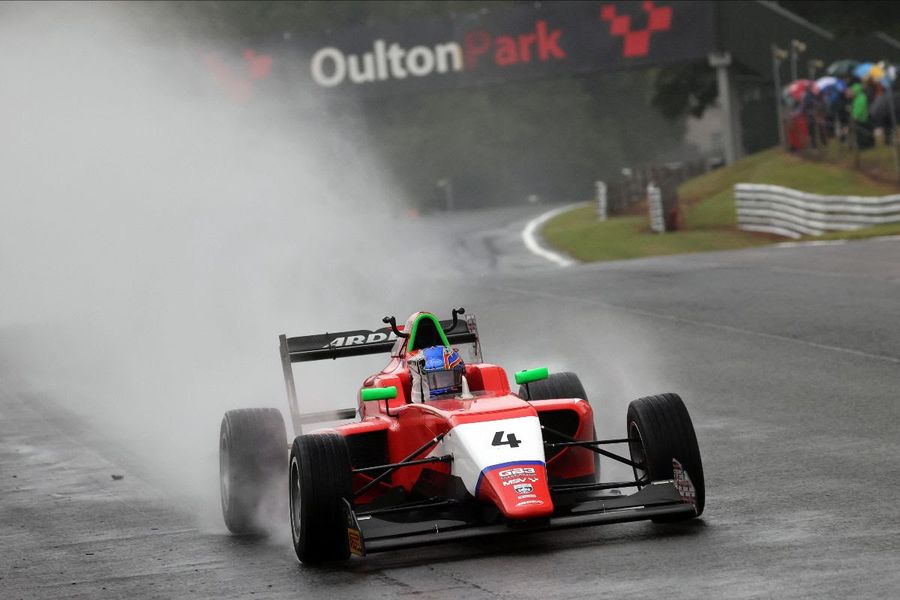
The significance of aerodynamics can be seen primarily in the downforce. Thesearch for greater downforce has become the driving factor behind entireFormula 1 teams. The shape of cars is grinded on the computer, in the windtunnel and on the track, and the wings and wind deflectors are styled just asmuch as the diffuser on the rear underside of the car. The aim of this precisionwork is to channel the airflows perfectly and so generate as much downforce aspossible, which presses the car down onto the road and permits shorter brakingdistances and higher cornering speeds. Experts estimate 80% of the car’s gripis generated by the downforce and only 20% by the tyres.
But downforce is not everything: the recipe for true success is to find the bestcompromise between the greatest possible downforce and the lowest possibleair resistance. There is no ideal set-up to suit every racetrack, so the true art ofthe designers is to get closer to the ideal than their competitors for every race.This is not an easy task, with 20 different possible settings for a rear wing and100 possible settings for a front wing.
The aerodynamics are the most important factor in the design of a Formula 1 car. An airduct panel between the front wheel and the side panel, for instance, can add more speedthan two or three extra horsepower. Only those teams with their own wind tunnel can keepup with the extremely fast development in this field. The engineers spend up to 15,000hours every year at the wind tunnel, and each complex costs about 45 million euros.Modern Formula 1 cars can withstand centrifugal forces of up to 4G without sliding off thetrack. The art of aerodynamics allows far higher cornering speeds than would be possiblewithout downforce, and so not only ensures a better performance but also even moresafety. As a rule of thumb, 35% of the total downforce is generated by the rear wing.
However, as it also causes the greatest air resistance, it is the rear wing’s setting that ischanged most from race to race. For the Italian Grand Prix on the high-speed track inMonza with its long straights and fast corners, the teams use flat wings to gain the highestpossible speeds. On city tracks like Monaco, or circuits with lots of narrow corners, wingelements with a steep setting help generate as much downforce as possible so the cars candrive through the corners faster. The front wings are responsible for 25% of the downforce– a value which can quickly be reduced to just 10% by air turbulence if the car is travellingdirectly behind another car. The remaining 40% of the downforce is provided by the diffuseron the vehicle underbody, a type of air accelerator whose tunnels and ducts lead theflowing air towards the rear so that it generates the strongest possible suction effect.
In contrast to Formula 1, passenger cars tend to create lift at medium and relatively highspeeds, because of their shape. As this relieves the load on the axle and reduces thedriving stability – and therefore also the safety – developers aim to keep the lift as low aspossible by creating minimal air resistance.
“This takes a lot of detailed work in the millimetre range. It ranges from smoothing down the underbody to optimising the airflow through the wheels and even to working on integrated rear spoilers,” explains Dr. ChristophLauterwasser from the Allianz Center for Technology. “That is the only way to achieve dragco-efficient values under 0.30 while at the same time minimising the lift on the rear axle.However, anyone travelling with a roof box or a bike carrier will completely undermine allthat meticulous development work.”
In Formula 1, too, aerodynamics will always remain one of the most important factors inspite of all the changes to the regulations. The developers are a long way from exhaustingall the possible options, so in the future, losing a hundredth of a second will still be a realdrag.
*
Allianz Safety Check: Autodromo Nazionale di Monza
- by Mark Webber, WilliamsF1 driver:
“Monza is the last real high-speed track in Formula 1. The wings are set flatter than onany other circuit. That means the car is very difficult to control when you are cornering orbraking before a corner. Driving flat out 70% of the time doesn’t only push the engines tothe limit: it’s a really hot race – in the truest sense of the word – for the brakes too. Butbecause Formula 1 uses only state-of-the-art materials, the safety of the drivers and thespectators is guaranteed in spite of these extreme material loads.”