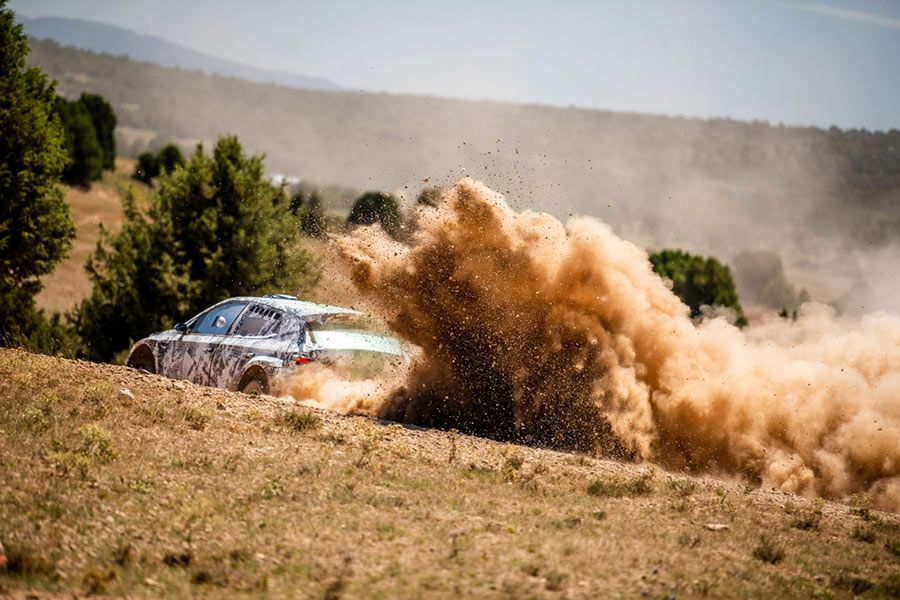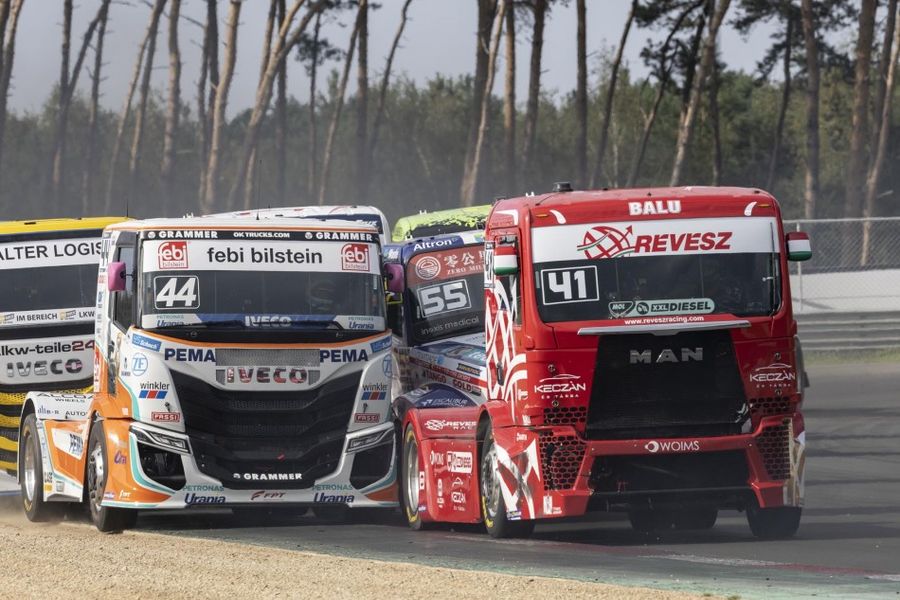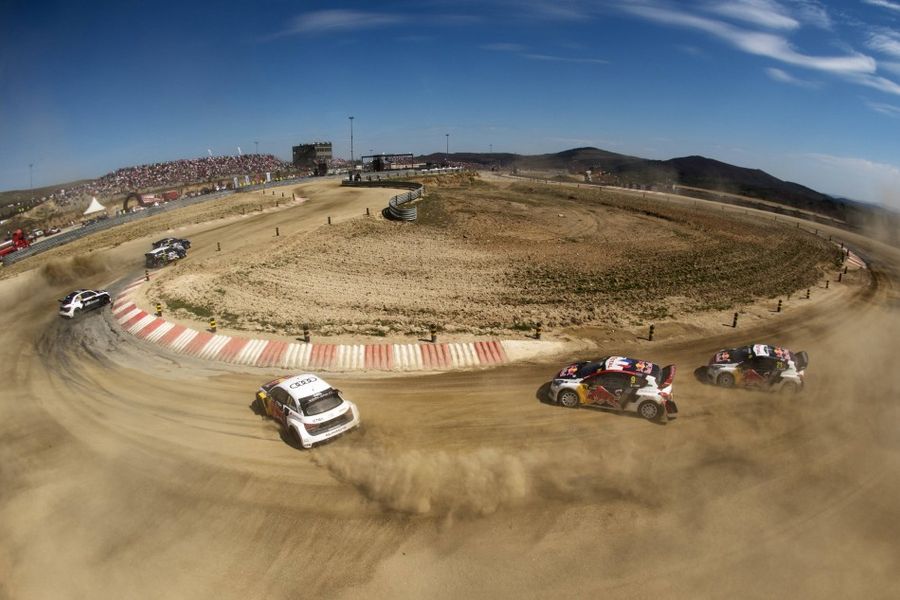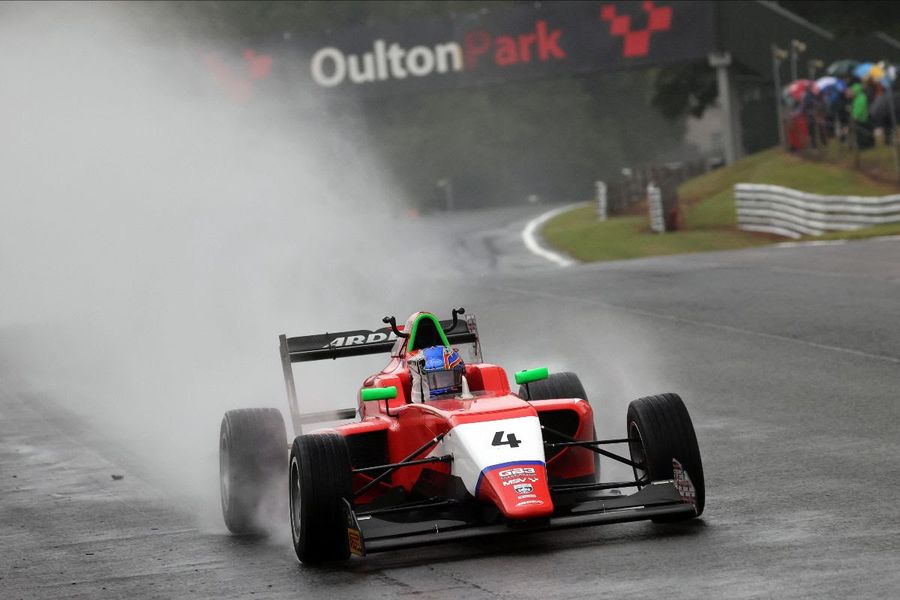













The character of a Formula 1 circuit is not defined by its corners andstraights alone. The surface itself is also criticial, as it influences the gripof the cars as well as the erosion of the tyres. This has an impact on theset-up and race strategy. When deciding a circuit’s composition,however, the planners consider not only the performance of the cars butalso the safety of the drivers and spectators.
The surface of a race track is almost always a compromise. When selectingthe materials and composition of the asphalt, the architects are alsodetermining the level of grip on the track which, as a rule, needs to beappropriate for both Formula 1 and motorcycle races. A circuit with only a littlegrip would lead to extended braking distances for cars and consequently tomore overtaking, which would make the races more exciting. For motorcycles,however, this would be disastrous – riding at extreme angles during corneringwould cause them to slip as if they were driving on soap.
A race track is composed of layers. The first is the bearing layer, above that isthe binding layer and on top the wearing layer – exactly as for normal roadconstruction. The bearing layer consists of a thick layer of coarse, watertightasphalt. The binding layer is applied on top of this foundation and serves tosmooth out the natural unevenness of the bearing layer and secure thewearing layer above. Depending on weather and maintenance, the service lifeof a race track surface is between five and 10 years.
When selecting the materials for the asphalt – a mixture of stones andbitumen. The German Hermann Tilke, who designed the new circuits inBahrain, Shanghai and Istanbul, usually selects the best stone from quarriesin the local vicinity. He then has the stone examined for suitability, as well asfor wear and grip, in a test laboratory. The so-called “Lord of the Rings” is notalways satisfied with the results: the stones for the Bahrain InternationalCircuit’s track surface had to be imported to the desert state from Wales atgreat expense.
As much as the surfaces of race tracks and standard roads may be similar, the stresses actingon them could hardly be more different. On a normal road, the greatest load is caused by thesort of weight when, for instance, a 30-tonne juggernaut brakes. On race tracks, the effects arethe exact opposite. The hot tyres of the race cars develop an adhesive quality similar to toughchewing gum and pull the stones upwards. A tremendous strain is also created by the highspeeds, which cause intense pressure in front of the cars and a vacuum behind them. Tilkedescribes the effects: “For the asphalt, this is as if someone was pounding it with a hammer atthe front and hoovering it at the back.”
In everyday traffic, the road surface also has a strong influence on the tyres’ grip. This applies tothe adhesion in dry conditions, but even more so to wet roads, where the so-called “macroroughness” determines how quickly a film of water builds up. “The important thing is that driversare not taken by surprise by unexpected changes in the grip of the road surface which might becaused by ruts in the road, patched asphalt or old or damaged road sections,” says DrChristoph Lauterwasser of the Allianz Center for Technology (AZT). “By the same token,dangerous spots can also be made safer by the targeted, localised application of high-gripasphalt layers. This is suitable ahead of pedestrian crossings, at crossroads or on motorwayramps, for example.”
In Formula 1, the question of how aggressive the track surface is to the tyres depends not onlyon the speeds driven and the number of braking operations, but also on the microstructure ofthe materials used. Tyre wear is particularly high at Barcelona and Monza, and is comparativelylow on the slow city track in Monaco. Particularly good levels of grip are provided at Malaysia,Barcelona, Hockenheim and Suzuka, while the tracks at Melbourne, Imola, Budapest and theNürburgring provide the poorest grip. Frank Dernie appreciates the varied conditions and levelsof difficulty. “It would be terrible if all race tracks were the same,” the Williams F1 Team veteransays. “Formula 1 is the class. Good drivers and good cars have to be fast wherever they’reracing.”
In the case of the Autodromo José Carlos Pace, also known as Interlagos, the host track for theBrazilian Grand Prix, the grip level and tyre wear are both relatively low. From that perspective,the circuit, on the outskirts of Sao Paulo, is not so different from the normal roads of this city ofmillions – except that it probably doesn’t have quite as many potholes.
Allianz Safety Check: Autodromo José Carlos Pace- by WilliamsF1 Team driver Mark Webber:“Two things immediately come to mind concerning this circuit. First of all, the bad surface which,despite all the organisers’ protestations, never really gets any better, and secondly that it’s oneof the three circuits in Formula 1 that’s driven anti-clockwise. Of course, the resultinguncustomary strain on our neck muscles is the lesser problem: the many bumps are worse.They can be dangerous, especially in the corners, where the impacts destabilise the cars duringbraking and result in a loss of traction.”