












In association with the Phil & Martha Bachman Foundation and Christopher Miele of Prancing Horse of Nashville, Mecum Auctions presents 46 Ferraris from the Bachman collection
Among the world's preeminent private Ferrari assemblages.
Low Mileage, High Originality and Impeccable Provenance
Celebrated for its pristine, low-mileage examples and impeccable provenance, the Bachman collection reflects decades of passion and discernment in regards to the Ferrari marque. From early icons to modern supercar legends, it captures the essence of Ferrari performance, innovation and design.
Featuring 48 hand-selected automobiles—many preserved in remarkably original condition—this once-in-a-generation collection offering will take center stage in Kissimmee this January.
Once blessed by Bachman’s sacred selection, a Ferrari is no longer merely a member of the Prancing Horse marque. It is one that has been sought, acquired and cared for by a man whose connection to the car makes it all the more desirable, respected and revered. These fine specimens of elite origin and unparalleled preservation are known as the Bachman Ferraris, and this January, all 46 will cross the block at Mecum’s annual Kissimmee auction event.
Long a collector of things and a lover of high-quality automobiles, it was in 1983 when the Tennessee-born Phil Bachman came face to face with a Ferrari 308 GTS Quattrovalvole. He was at an auto dealers trade show in Washington, D.C., and as he recalls it, the car “struck a chord” within him.
So deeply did that chord reverberate that it was only a matter of days before he’d managed to order his very own 1984 model through a dealer out of Nashville. However, per Bachman’s decided instructions, his Quattrovalvole would be delivered to him in a bold shade of yellow, an instinctual choice made with the intention of setting his car apart from the multitude of red machines that have long dominated Ferrari lineage.
The Growth of The Bachman Ferrari Collection
Some might argue that the real appeal of any organized assemblage is the collective nature the items within share, and more importantly, the story that together they tell. As Bachman’s love for Ferrari and its masterful machines grew, it also matured, and he too adopted this belief.
With time, Bachman found that he did not simply desire to amass as many of Ferrari’s finest as he could, but to do so with intention—intention to create something that would pay homage to the marque and its accomplishments: a congregation in reverent service to one of the world’s most elite automotive industrialists and a living timeline of its legacy.
In pursuit of that goal, Phil Bachman began carefully curating the group of cars that would form his own impactful legacy, and he kept his focus on two most meritorious qualities in his search: low miles and examples that were the last of their kind.
Over the next four decades, Bachman acquired 46 Ferraris of varying vintage and model, and he made it a point never to sell a single one. Once assimilated into his home, the cars were there to stay.
The Bachman Ferrari Collection: Supercars
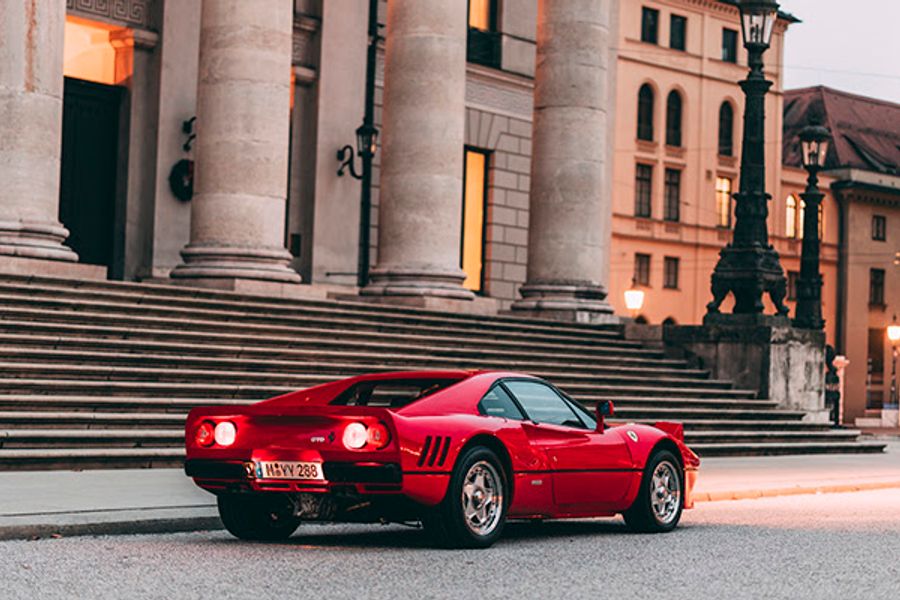
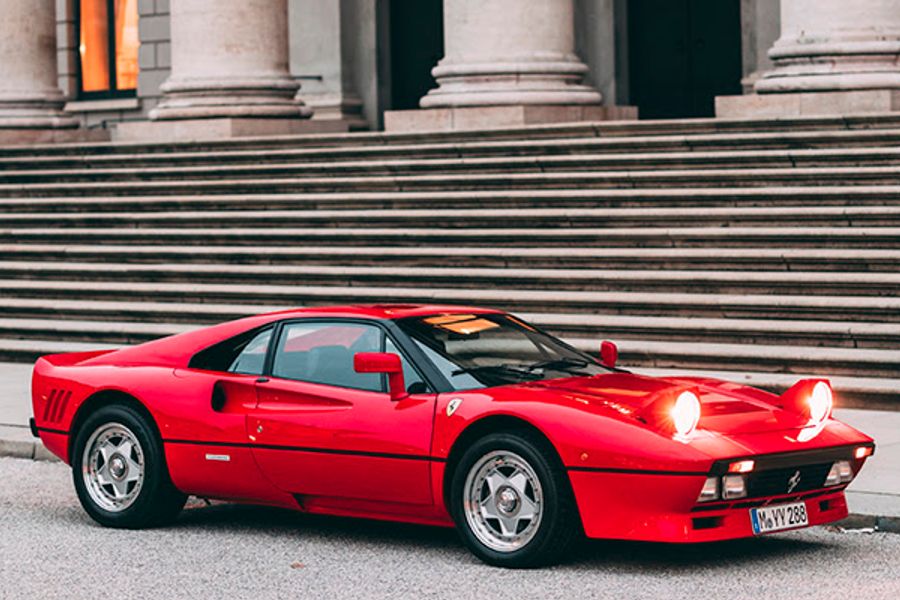
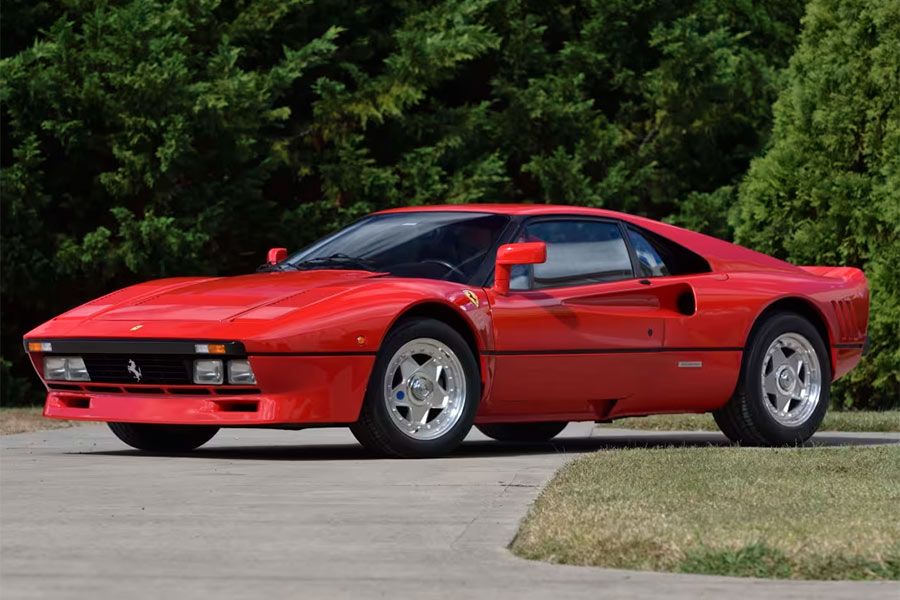
The Bachman Ferrari Collection leans heavily into the contemporary realm of the Ferrari fold, and there are several categories of collectibility within. There are the truest supercars, which include examples such as a (one-of-272) 1985 Ferrari 288 GTO, a pair of (one-of-60) U.S.-specification 1992 Ferrari F40s and one of the succeeding (one-of-55) U.S.-specification 1995 Ferrari F50s, along with a (one-of-400) 2003 Enzo in Bachman’s signature yellow, a (one-of-500) LaFerrari and a (one-of-210) LaFerrari Aperta (both in yellow and denoted by the factory as the last U.S. versions of their kind), and even an exceedingly rare (one-of-30) 2006 track-only FXX.
The lattermost Ferrari likely boasts among the most miles of any that Bachman purchased new, as its introduction as a developmental car meant it was sold to Bachman as part of a purpose-directed program in which he eagerly took part.
Impressively, Phil Bachman was granted the only original yellow FXX ever produced by Ferrari. While several FXXs were later repainted yellow during their EVO upgrades, Bachman’s remains the sole example that left the factory in its original yellow livery. Following the EVO upgrade, the car has recorded just 2,318 kilometers, preserving its extraordinary originality while still representing one of the most historically significant factory programs of the modern Ferrari era.
By this time a truly A-list patron by all Ferrari standards, Bachman’s predilections were both well known and well respected by company leadership. They made sure to offer him his choice color in every instance possible and even made sincere efforts to reserve the last car in the line of any model he desired, a preference that Bachman reportedly developed in 1999 after the factory accommodated his simple request to buy the last F355 Spider Serie Fiorano, designating the Bachman car as No. 100 of 100.
The Bachman Ferrari Collection: Front-Engine V-12s
Another of The Bachman Ferrari Collection subsets is an assortment of front-engine V-12 models that span 1953 through 2017 in chronology. Indeed, this is a group that includes both the oldest and newest of Bachman’s Prancing Horse fleet.
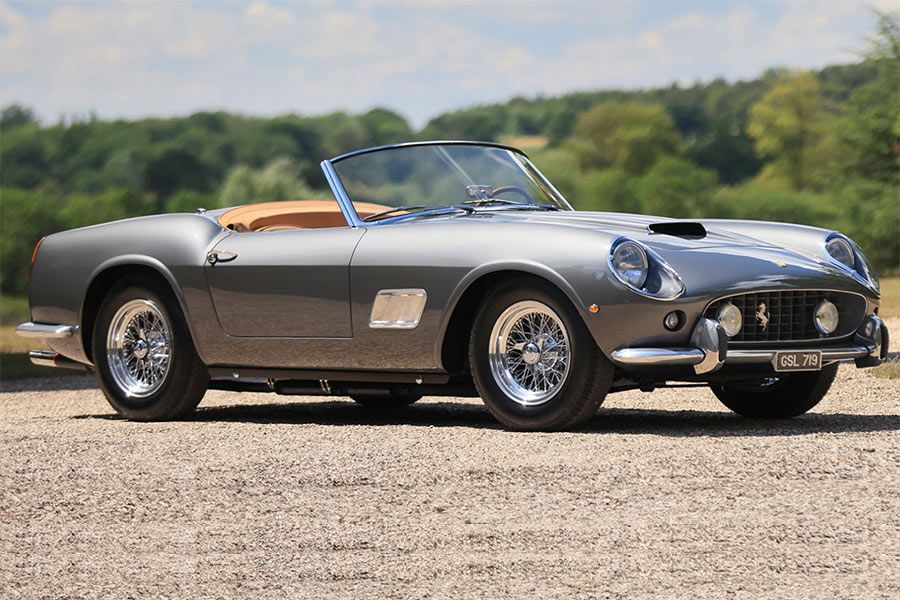
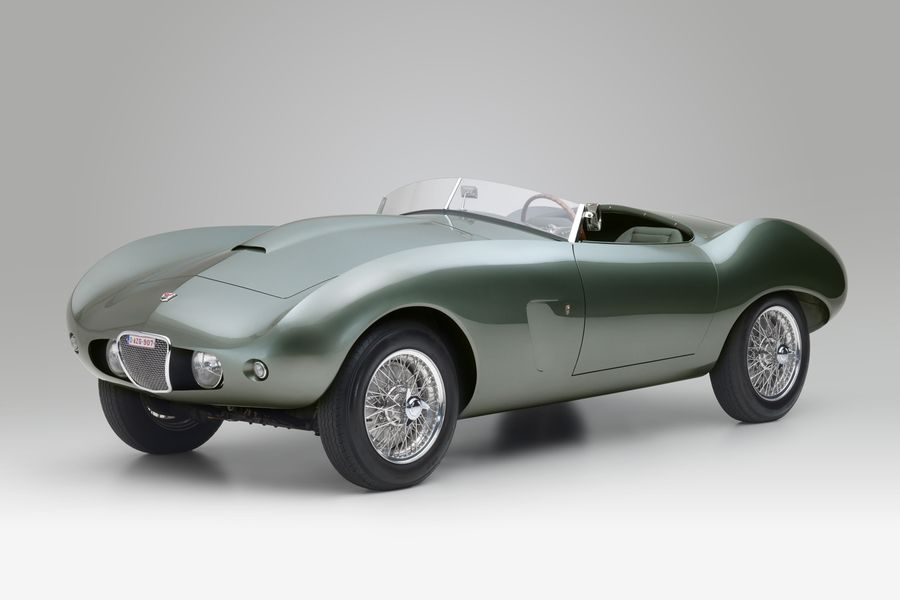
His 1953 Ferrari 166 MM/53 Vignale Spyder is the final of just six 166 MM/53 Spyders to have left the factory with a Vignale body, a fact keeping it well within Bachman’s lexicon of interest in low-production and final-built examples. Compact in size and purpose-built, the 166 MM/53 Vignale Spyders are considered by many to be the ultimate development of Ferrari’s first great sports car—all the more reason to hold space in Bachman’s stables.
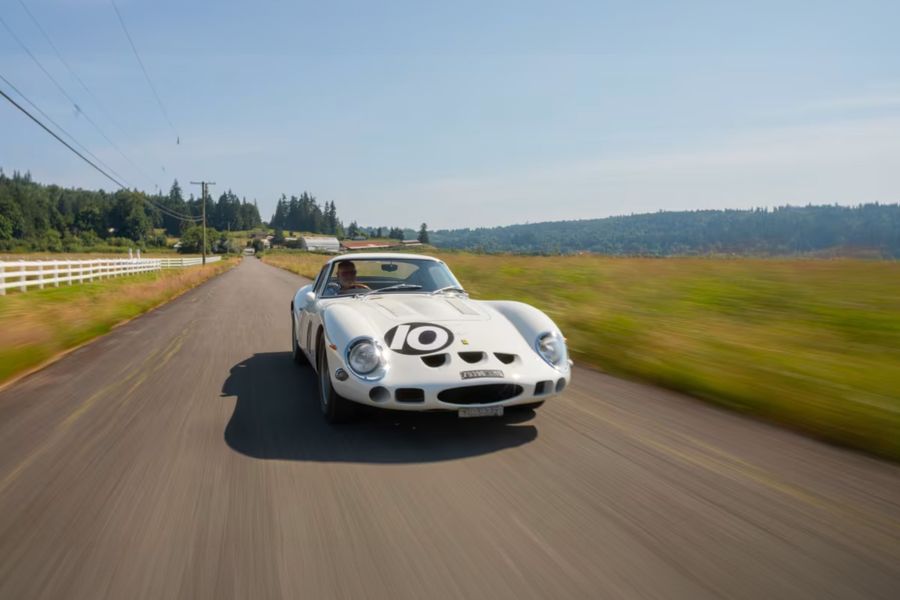
Other models of the front-engine V-12 variety include his (one-of-350) 1964 Ferrari 250 GT/L Berlinetta Lusso, his one-of-a-reported-16 alloy-bodied 1967 Ferrari 275 GTB/4, and his trio of 365 GTB/4 Daytonas, one of which is an early example with the full-length plexiglass nose. It also includes contemporary examples such as his (one-of-448) 2001 Ferrari 550 Barchetta, a pair of (one-of-559) 2005 Ferrari 575M Superamericas, a (one-of-599) 599 GTO, a (one-of-80) 599 SA Aperta and a (one-of-799) F12tdf from 2017.
The Bachman Ferrari Collection: 3-Series, Flat-12s, Dinos and More
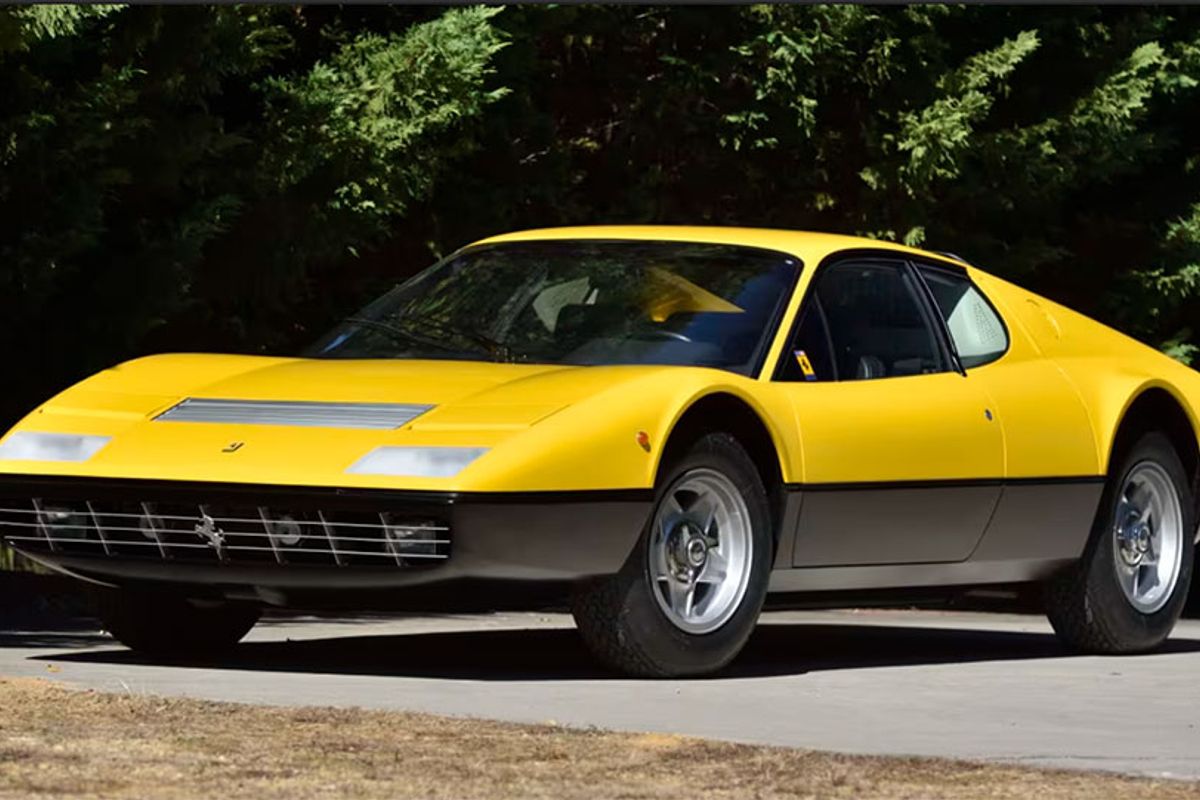
Beyond those already mentioned, Bachman additionally collected 3-Series Ferraris: variants from the “Vetroresina” (fiberglass) 308s to the 458, along with Flat-12 Ferraris such as the Boxer and Testarossa, including a pair of Ferrari’s 1984 512 BBi, one that was the ninth-to-last of the 1,007 made and one that wears the last serial number of the run.
He even welcomed a pair of Dinos (one a rare 246 GTS Chairs & Flares car) into the sanctuary that held his sacred collection—surprising only due to the Dino’s unique nature as a model that was never officially badged as a Ferrari.
Notably, several of Bachman’s most significant Ferraris were restored by the renowned David Carte, including his 1967 Ferrari 275 GTB/4, his 246 GTS “Chairs & Flares” and his 1964 Ferrari 250 GT/L Berlinetta Lusso. Each underwent a comprehensive and meticulous restoration to the highest concours standards, further elevating their historical and collectible significance within The Bachman Ferrari Collection.
The Bachman Ferrari Collection: Care and Legacy
While Phil Bachman held the Ferrari name with likely more reverence than almost any of his fervent peers, he did eschew some of the commonly held beliefs that buoyed the Ferrari brand. It is often said that Ferraris are meant to be driven, and while Bachman didn’t necessarily deny the veracity of the claim, he himself had little desire to drive his cars. For Bachman, preservation and the pursuit of perfection were the ways in which he preferred to express his devotion.
He sought out only the lowest-mile examples still extant today, often passing on those he pined for most with the disciplined determination to wait for one that was even better. His resoluteness usually paid off, and he has ultimately built one of the most well-preserved and lowest-mile collections of contemporary Ferraris anywhere in the world.
While not necessarily driven, neither were the cars left to languish. Bachman was almost fanatical in his care of these Ferraris. He insisted on being intimately involved in every aspect of their stewardship.
Such attentiveness paid off in droves, with the Bachman Ferraris collectively garnering awards, honors, trophies and the like at judged concours events and other such organized occasions. Most have won at least a Platinum award, the highest class-level award given by the Ferrari Club of America (FCA) and a benchmark recognizing well-maintained examples.
When it comes to the cars that Phil Bachman himself ordered new, almost every one boasts his signature yellow finish along with other custom touches as granted. His son once said that he thinks the color selection was almost more of an obligation than a choice, one borne of Bachman’s own spirited personality.
The other custom touches he believed were the result of that creative desire innate to all humans: the desire to express oneself. In Bachman’s case, his desire for expression poured out most readily through the medium he loved best: Ferrari.
The Bachman Ferrari Collection exists today as one of the most elite of any contemporary Ferrari collection ever built. With a full 46 of the Prancing Horse’s finest vintage and modern machines present here, most with low miles, low production numbers and high originality, this collection is one of a kind and entirely inimitable, never to be replicated in this lifetime or the next.
Presented together for the first time with the assistance of Christopher Miele of Prancing Horse of Nashville, its offering this January in Kissimmee represents a once-in-a-generation opportunity for collectors to acquire vehicles long held in private hands, and it will be an extraordinary moment destined to make headlines across the global collector car market.