







• One of only six left-hand drive Series V cars with the Special Series engine
• Delivered new to France
• In the present ownership for over 50 years
• Matching numbers
• Original colour combination
• Engine refurbished 10 years ago
"Performance, controllability and comfort have been combined in the Aston Martin DB4 to make it a highly desirable car: one in which long journeys can be completed very quickly indeed with the minimum of risk or discomfort and the maximum of pleasure." - The Motor.
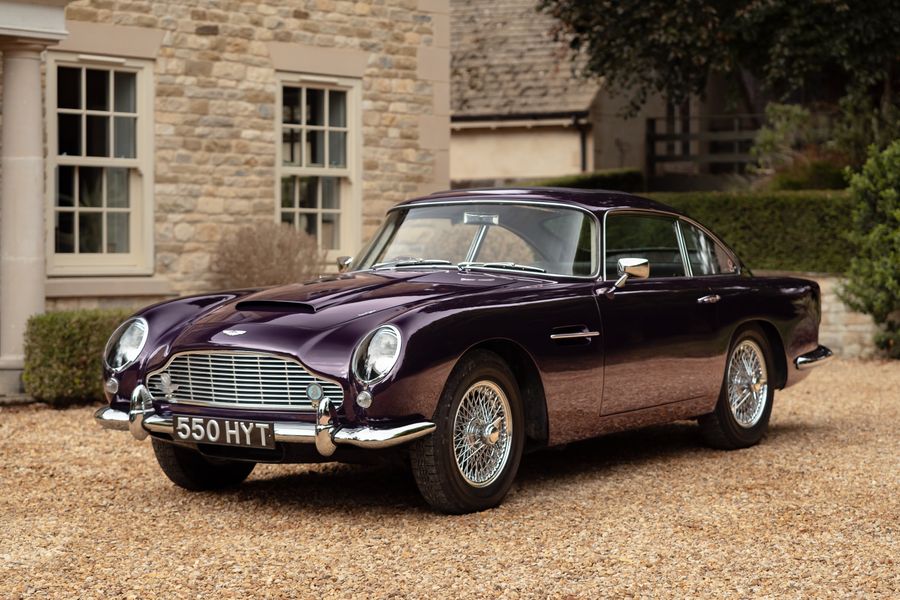
Classically proportioned and instantly recognisable from the moment of its introduction in 1958, the Touring-styled Aston Martin DB4 established a look that would survive, with only minor revisions, until 1970. Designed by Tadek Marek and already proven in racing, the DB4's new twin-cam six-cylinder engine displaced 3,670cc while the gearbox was a new David Brown four-speed all-synchromesh unit. An immensely strong platform-type chassis, designed by Harold Beach, replaced the preceding DB2/4's multi-tubular spaceframe, the latter being considered incompatible with Touring's Superleggera body construction. The DB2/4's trailing-link independent front suspension gave way to unequal-length wishbones while at the rear the DB4 sported a live axle located by a Watts linkage instead of its predecessor's Panhard rod. Boasting disc brakes all round and with 240bhp on tap, the DB4 was the first production car capable of accelerating from a standing start to 100mph and back to rest again in under 30 seconds. At a time when few family saloons were capable of exceeding 70mph and took an age to get there, this staggering performance made the DB4 just about the fastest thing on the road, easily the equal of its Italian rivals.
Manufactured between October 1958 and June 1963, the DB4 developed through no fewer than five series. However, it should be made clear that the cars were not thus designated by the factory, this nomenclature having been suggested subsequently by the Aston Martin Owners Club to aid identification as the model evolved. The first series had already undergone several improvements, including the fitting of heavy-duty bumpers after the first 50 cars, before the second series arrived in January 1960. A front-hinged bonnet, bigger brake callipers, and an enlarged sump were the major changes made on the Series II, while the third series featured separate rear lights, two bonnet stays, and a host of improvements to the interior fittings. The fourth series was readily distinguishable by its new grille (with seven vertical bars), shallower bonnet intake, and recessed rear lights, while the final (fifth) series manufactured between September 1962 and June 1963 was 3.5" longer (allowing for increased leg room and a larger boot) and gained 15" wheels, an electric radiator fan, and the DB4GT-type instrument panel.
One of the most notable developments had arrived with the introduction of the 'Series IV' in September 1961, when a 'Special Series' (SS) engine became available as an option. The 'SS' unit boasted a 9.0:1 compression ratio; larger valves and inner valve springs from the DB4GT; and triple SU HD8 carburettors with a black-painted cold-air box, producing 266bhp at 5,750rpm, a gain of 26 horsepower over the standard unit. Optional on the regular model, an oil cooler was standard on the cars coming with the SS engine. Almost all DB4 Vantages were built with the faired-in headlights of the DB4GT, making the example we offer something of a rarity.
The Series V is one of the rarest and most desirable of the DB range with only 50 cars built in this final incarnation of the DB4. Indeed, the original 'James Bond' car used in the filming of Goldfinger was a DB4 Series V, as they look virtually identical to the DB5, which at that time was not quite ready.
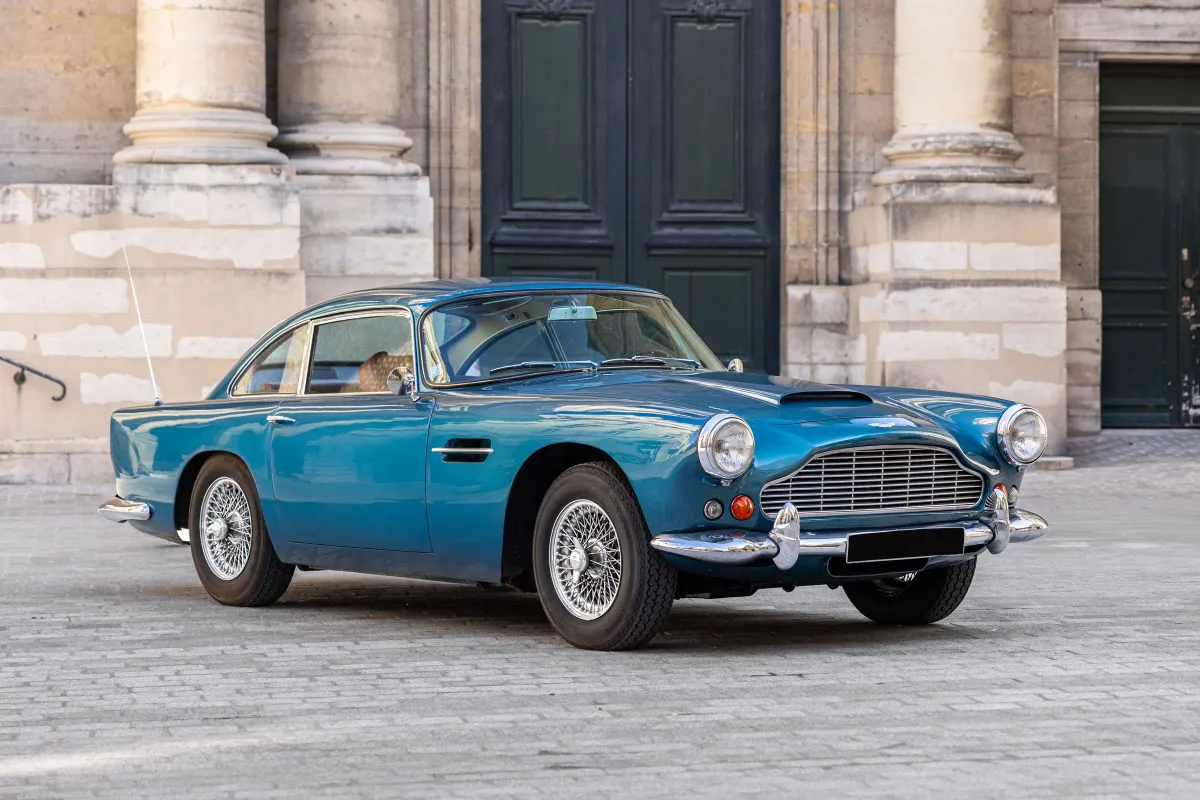
Chassis number '1001/L' is one of an estimated 19 Series V examples built with the Special Series (SS) engine, only six of which were of left-hand drive configuration like this car. Shipped to Aston Martin's French agent Garage Mirabeau on 4th October 1962, '1001/L' is a matching numbers example retaining its original engine, chassis, body, gearbox, exterior colour (Aegean Blue), and tan Connolly interior trim (VM 3280). The DB4 was delivered new on 27th October 1962 to its first owner, Mr Pierre Zannettacci, a French gentleman resident in the 16th District of Paris. Remarkably, the Aston has had only two owners since 1962, has belonged to the current vendor for more than 50 years, and has always remained Parisian since its arrival in France.
Some 10 years ago the engine was extensively refurbished; the gearbox synchros and clutch replaced; and the rear brake calipers rebuilt. The DB4 has been serviced regularly at Cecil Cars, and during a recent test drive, the engine started immediately and ran smoothly, revving without difficulties, performing well at low and high speeds, shifting gears smoothly.
Listed in James Taylor's book Factory-Original Aston Martin DB4/5/6, '1001/L' comes with sundry invoices; Garage Mirabeau's delivery note; the original purchase invoice; 2015 Expertise report; a valid French Carte Grise; and an up-to-date Contrôle Technique. A wonderful opportunity to acquire a highly original and well maintained Aston Martin DB4 Series V with Special Series engine - the first 'SS' Series V built - offered from long-term enthusiast ownership.
Bonhams
The Paris Sale
30 January 2026, 12:00 CET