




Image: Michael Kavena
Text: Laure Van de Vyver
BOSS GPBOSS GP TO OPEN THE 2 TOURS D’HORLOGE
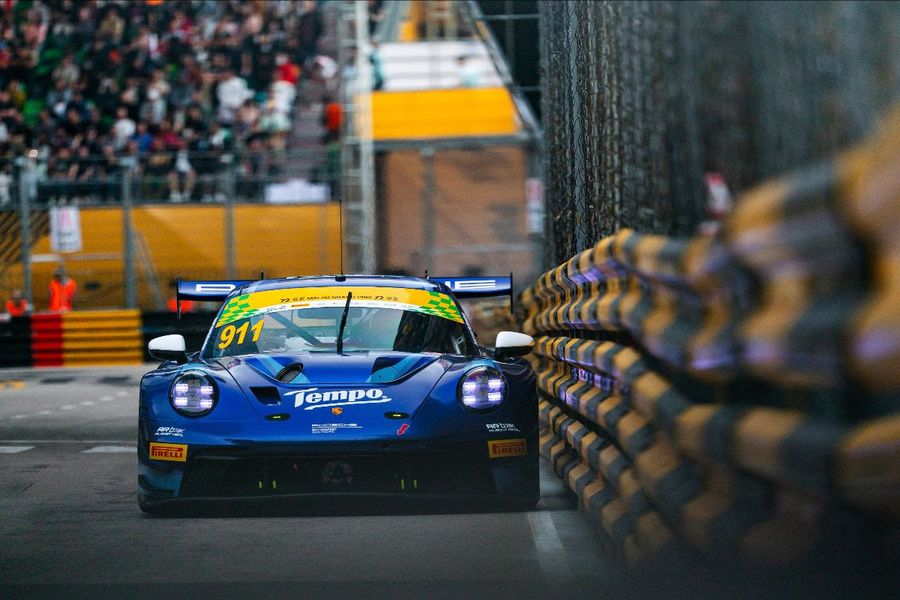
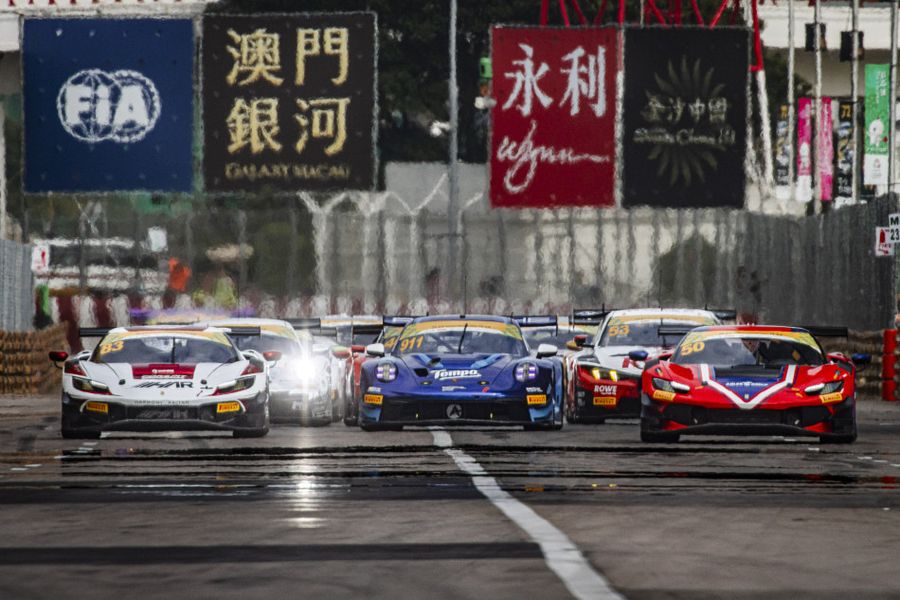
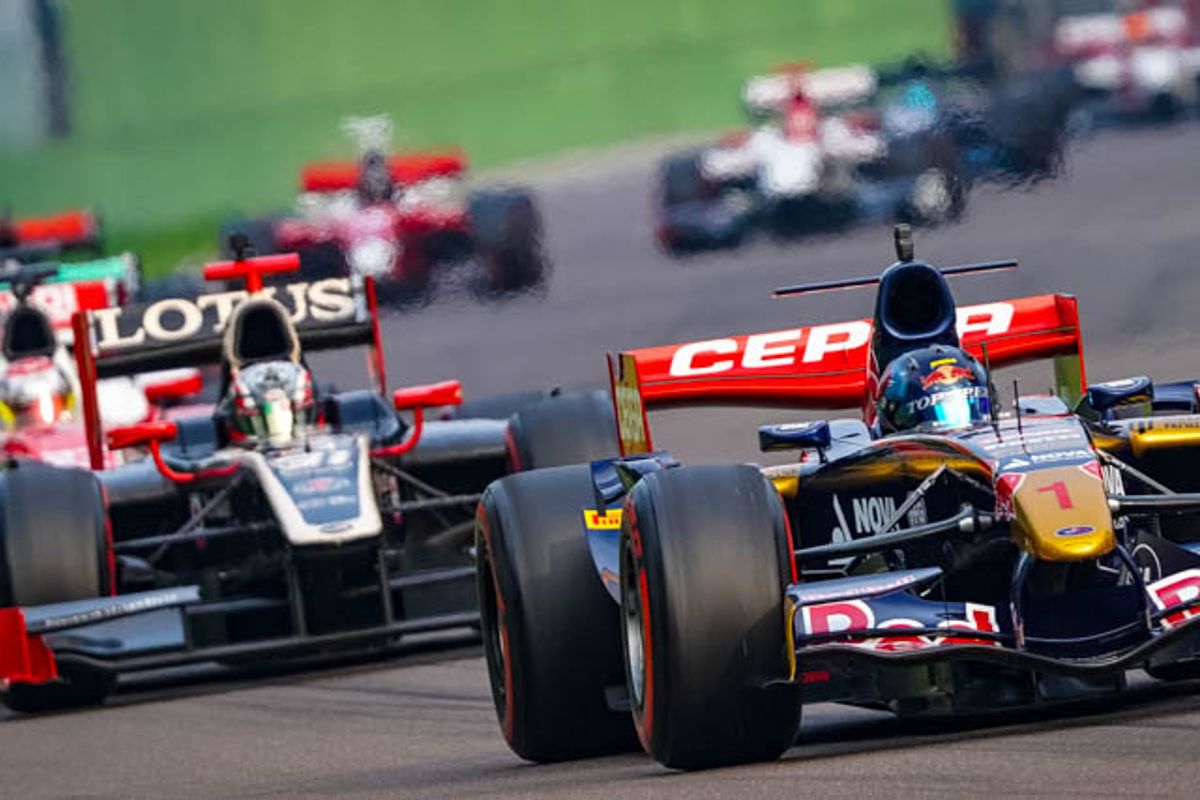
BOSS GP will feature as the opening act for the 2 Tours d’Horloge on Saturday 7 November. The grid will bring together the fastest cars seen in competition this year at Circuit Paul Ricard, including several Formula 1, Formula 2 and World Series cars from the 1990s to the 2020s.
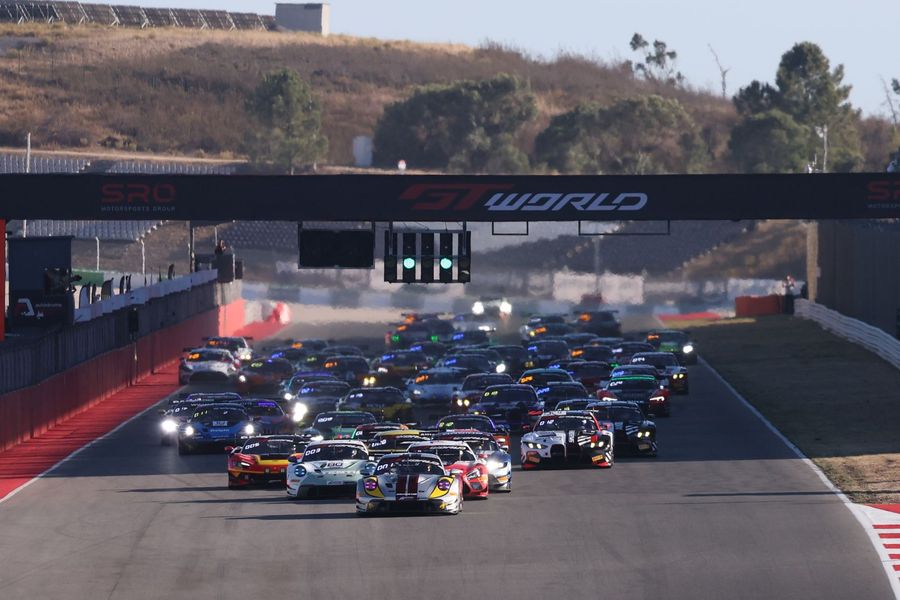
The 2 Tours d’Horloge are defined by their unchanging 24-hour format. We will never move away from this magical and unique concept in the world of historic racing. We will also preserve our starting procedure, with the cars lined up in echelon formation followed by the spectacular Le Mans-style start.
Respecting tradition does not rule out innovation. We are therefore working tirelessly on the pre-race entertainment programme, with the aim of gradually building excitement from Saturday morning right through to the start at 4 pm. At 2:50 pm, we will witness a moving tribute to the Alpine Renault adventure at the 24 Hours of Le Mans, featuring three prototype cars from the 1970s in a demonstration run. Before that, the BOSS GP grid will provide a truly memorable thrill.
The race will be a sprint of just over 20 minutes, contested by modern carbon-fibre single-seaters… I do not think we could have found a series whose philosophy is further removed from ours! And that is exactly what we wanted: to enrich our event with a variety of experiences, bringing together young and old alike around a shared passion for the many facets of motor sport.
Personally, I am curious to discover “the fastest racing series in Europe”. The sight of a Formula 1 car from the 2000s – weighing 600 kg and producing 800 bhp – accelerating to the deafening roar of a V10 revving at 15,000 rpm promises to be quite something.
Modern cars will also be in the spotlight with the Ferdinand Cup NextGen, featuring Porsche 996 Cup, road-going 996 GT, Boxster and Cayman models. The morning programme will include three further races well known to V de V Sports enthusiasts: the Trophée Lotus and the ASAVE Racing 65 and 76 series (see the timetable here). And that is not all! The on-track action will be complemented by an exhibitors’ village, offering plenty to entertain the whole family.
No series in Europe pits cars against each other that are as fast as those competing in BOSS GP. For almost 35 years, the grid has brought together powerful single-seaters from the 1990s to the present day.
BOSS GP is officially authorised as an International Championship by the FIA. Cars eligible for BOSS GP comply with the regulations of leading recent single-seater categories, including Formula 1, Formula 2, Formula 3000, GP2, World Series by Renault 3.5, A1GP, IndyCars and even the exotic Formula Nippon. Together, they offer the fastest and most thrilling motorsport in the world, which is unrivalled in its form within the global motorsport universe.
Among the Formula 1 cars regularly seen on the track so far this season are the Toro Rosso STR1 driven by Scott Speed and Vitantonio Liuzzi in 2006, and the race-winning Williams FW25 driven by Ralf Schumacher and Juan Pablo Montoya. There were also guest appearances by the Benetton B197, driven by Jean Alesi and Gerhard Berger in 1997; the Prost AP02, raced by Olivier Panis and Jarno Trulli in 1999; and the more recent Lotus T127, campaigned by Jarno Trulli and Heikki Kovalainen in 2010. Most of the race cars in BOSS GP are modern F2 Turbo cars, GP2 Mecachrome V8 powered cars from all generations, and World Series V8 cars.
The series has not returned to Circuit Paul Ricard since 2023. With the race in November, they bring the 2026 season, which consists of six rounds around Europe, to a close.
Pirelli is the exclusive tyre supplier to BOSS GP. The renowned Italian tyre manufacturer offers BOSS GP participants a unique product: F1 performance combined with easier tyre warming up.
Each BOSS GP race weekend consists of two free practice sessions and one 30-minute qualifying session, followed by two 22-minute races, held on Friday and Saturday.
Three Questions for Victor Jabouille
The 27-year-old driver will take part in the Renault Alpine sports prototype parade ahead of the 2 Tours d’Horloge. His father, Jean-Pierre, who passed away in 2023, was one of the key figures in the turbocharged endurance racing adventure.
A443... What does that code mean to you?
Victor Jabouille: It is the name of the Renault Alpine my father drove at the 1978 24 Hours of Le Mans. He and Patrick Depailler were leading the race at dawn, two laps ahead. The team then decided to reduce the turbo boost pressure to save the engine. It proved to be a bad idea. The V6 failed half an hour later, and it was an A442B that went on to win.
Have you ever driven it?
I have only sat in it, back in May, to adjust my driving position ahead of the 2 Tours d’Horloge demonstration. The seat, which was moulded to my father in 1978, fits me perfectly. I am 1.83 m tall, just like him, and we have exactly the same build. The driving position is unusual, however, with the pedal box positioned relatively centrally in the cockpit while the steering wheel sits to the right. As for the rest, Renault’s engineers explained the warm-up procedure to me in detail. It is quite complex because you have to keep working the throttle continuously, without engaging the turbo, in order to stabilise the air-oil mixture and water pressure.
Do you know the 2 Tours d’Horloge?
The director of Circuit Paul Ricard, Nicolas Deschaux, has spoken very highly of it. I am always pleased to come to this circuit because my father helped design it in 1969, alongside several of the great drivers of that era. It was also at Le Castellet that he contested his first Formula 1 Grand Prix in 1975 with Tyrrell. Driving there 50 years later is still an emotional experience.
Spotlight on the TVR Griffith 200
All regular followers of the V de V Sports series know the yellow car entered by Éric Van de Vyver for more than 30 years. But who knows the true story behind the TVR Griffith?
TVR: three capital letters taken from the first name of Trevor Wilkinson, a young British engineer who first took advantage of the post-war climate by refurbishing military vehicles into transport trucks. He then built his first, one-off car based on an Alvis Firebird chassis, followed by a small production run of his Jomar, which inherited many components from the Volkswagen Beetle. The 1958 Grantura reused the chassis, combined with a well-styled but rather poorly executed fibreglass body.
A DISASTROUS LE MANS ENTRY
It was with this model that TVR took on the 24 Hours of Le Mans in 1962. The paint had barely dried when the three cars left the factory in Blackpool, in north-west England. Near Birmingham, one of the MG-derived engines developed carburation problems: weld residue was floating around inside the fuel tank. The convoy had to stop every time a fuel line became blocked. Frustrated, competition director Ken Richardson missed a braking point and drove straight across a roundabout in the suburbs of London.
The three cars eventually limped into the Sarthe, but only entries #31 and #65 took part in practice. Both suffered overheating problems on the Hunaudières Straight because their radiators were too small. The issue could not be resolved and only #31 took the start, completing just three laps before retiring.
GRIFFITH, THE ANTI-COBRA
This costly experience plunged TVR into a deep crisis. That is when Jack Griffith, importer of the Grantura in the United States, stepped in. His idea? Replace the 98 bhp four-cylinder engine with the large Ford V8 used in the Shelby Cobra, producing more than 280 bhp. In 1965, during an SCCA championship race, a Griffith driven by Tom Lynch got the better of the factory Cobras of Ken Miles and Dave MacDonald before retiring with a puncture. The episode would remain the model’s greatest achievement in competition.
For more than 30 years, the 1964 TVR Griffith entered by Éric Van de Vyver has added its own touch of diversity to the V de V Sports series. The yellow car has been driven by many notable names, including tennis player Henri Leconte who, together with Éric Van de Vyver, finished second in the 12 Hours of Jarama and the 12 Hours of Magny-Cours in 2018. “It weighs 900 kg and produces 450 bhp, which gives it a power-to-weight ratio of two,” quickly calculates the owner-driver. “It is not an easy car to drive, but it is hugely enjoyable. It is particularly effective on fast circuits because it is a genuine dragster capable of reaching 300 km/h. And like a genuine dragster... it does not stop very well!”
Available now...Grac MT14B
This superb 1972 Grac MT14B, eligible for V de V Sports and therefore for the 2 Tours d’Horloge, is currently for sale.
Built in Valence, France, this sports prototype underwent a complete restoration just five years ago. Lightweight at 573 kg and powered by a strong 200 bhp BMW four-cylinder engine, it is ready to return to the track following a service and an update of its safety equipment. For further information and price: vdevsportscommunication@gmail.com.
Because endurance is not measured only in hours: it is reflected in a driver's resilience, in the ability to push through fatigue and become one with the machine. A mindset embodied by Steve McQueen, combining physical commitment with the pursuit of excellence.
This year also marks the 55th anniversary of the film Le Mans, starring Steve McQueen and released in 1971. Fascinated by beautiful design and mechanical precision, he turned the film into an enduring icon of automotive culture. Steve McQueen Eyewear will unveil an exclusive collaboration celebrating this cult classic.