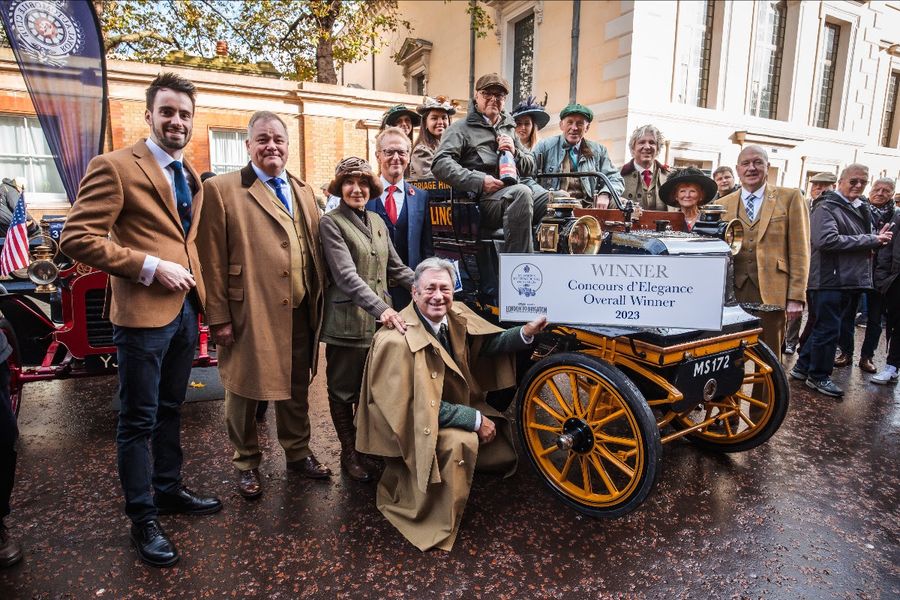












One of the earliest surviving Daimlers will be among the highlights at the Royal Automobile Club’s St James’s Motoring Spectacle in central London on Saturday 31 October
Founded in 1896, the Daimler Motor Company Limited was the first British car builder to achieve significant volume production, and one of its earliest models – perhaps its earliest – will be displayed at the hugely popular, free to attend event on Pall Mall outside the Club’s Headquarters.
It is a fitting location for the celebration, too, as Daimler’s history is inextricably linked with that of the Royal Automobile Club. It was the Club’s founder, Frederick Simms, who befriended Gottlieb Daimler after recognising the world-changing potential of his high-speed petrol engines.
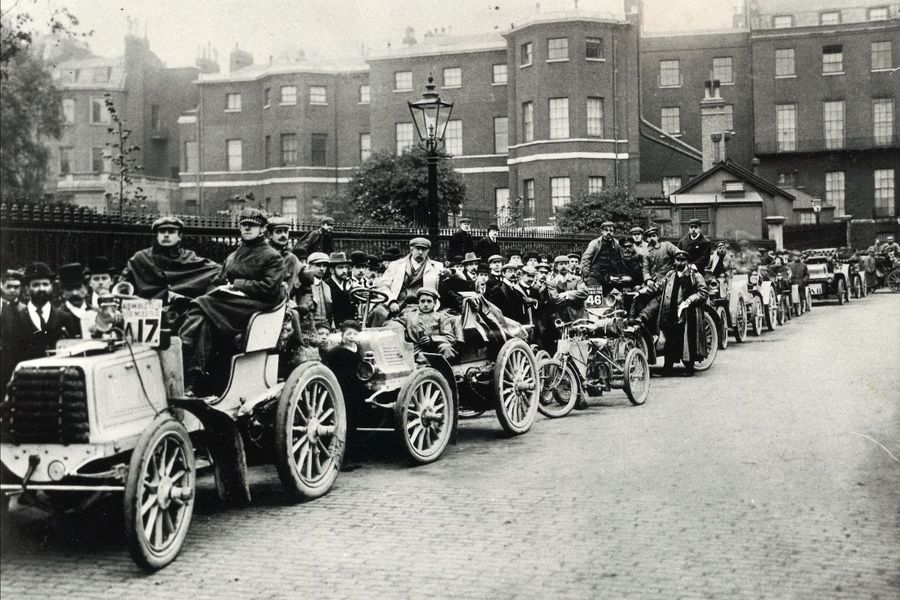
Simms subsequently acquired the rights to manufacture Daimler’s engines and patents throughout the British Empire, aside from Canada, before selling them to financier Harry J. Lawson. Lawson established the company and set up a factory in a converted mill in Coventry. In 1896, Lawson organised the historic Emancipation Run from London to Brighton to acclaim the newly passed Locomotives on the Highway Act – a seismic moment commemorated by the Royal Automobile Club’s annual Veteran Car Run.
Simms remained as the new company’s Chief Consulting Engineer, laying the groundwork for Britain’s first mass-scale car manufacturer and overseeing the development of the first British-built Daimlers in 1897.
The first cars were built with a wood-framed Phaeton body on a steel chassis, a leather interior and an elephant-hide folding roof. Power came from a twin-cylinder, 1141cc engine, providing a top speed of around 24mph. They were priced at £375 – more than £40,000 in today’s money.
Illustrating the prowess of these 4hp pathfinders, in October 1897 one was the first to drive the 929 miles from John O’Groats to Lands End – Henry Sturmey, founding editor of The Autocar, becoming the first person to cross Great Britain from end-to-end by automobile.
Just a few of these original Daimler Phaetons are known to have survived and, as Daimler did not build in number order and the early factory records were destroyed in the 1941 Coventry Blitz, any of these could be the first.
The model being displayed at the Spectacle is almost certainly the oldest surviving Coventry built Daimler in existence and without doubt one of the very earliest British-built vehicles of any marque. It is now preserved by the Jaguar Daimler Heritage Trust and its history is exceptionally well documented.
It was initially purchased by Dr Vickers from Shropshire, who used it to visit patients around the Wellington area. In 1899, the car was returned to Daimler to have its steering updated from a tiller to a wheel.
During his ownership, Dr Vickers drove it as far as France and Belgium before selling the car in 1906 to his friend Joe Atkinson, who used it until his death in 1953, when it was acquired by Commander Edward (Ted) Woolley.
Under Woolley’s curation, an extensive restoration was undertaken, changing the colour to cream, and it was at this time that the apt numberplate AD 1897 was acquired.
Woolley was not afraid to drive the car and regularly took it long distances. His trips included crossing the Alps from France to Italy via the 7,000ft Col du Mont Cenis, as well as touring from Britain to Munich and Turin and back. He also regularly entered the annual London to Brighton Veteran Car Run.
In 1984, after 31 years of ownership, Woolley died and, the following year – with the help of Jaguar Cars Ltd and a Science Museum grant – AD 1897 was purchased by the Jaguar Daimler Heritage Trust. A further restoration was then undertaken, with the bodywork returned to its original dark blue in time to celebrate Daimler’s centenary in 1996.
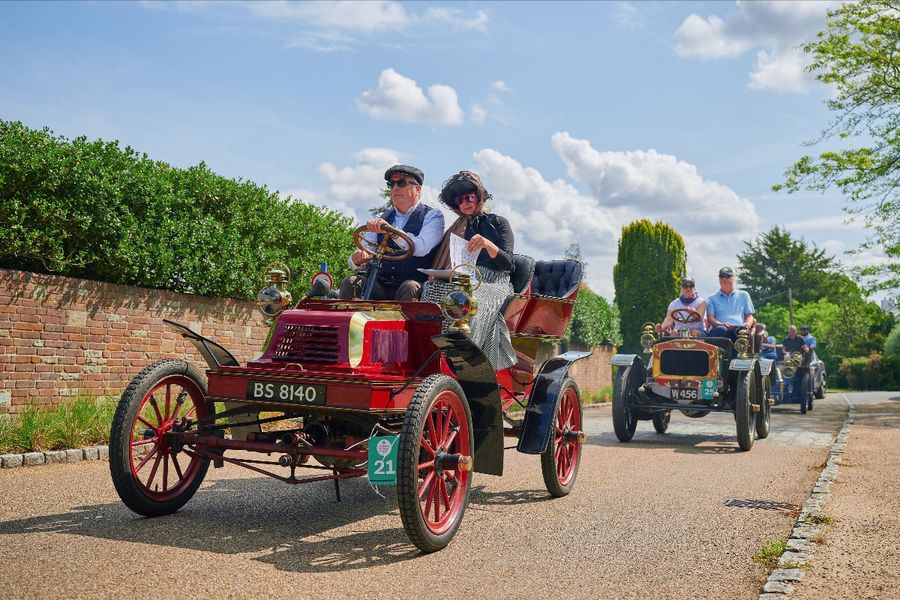
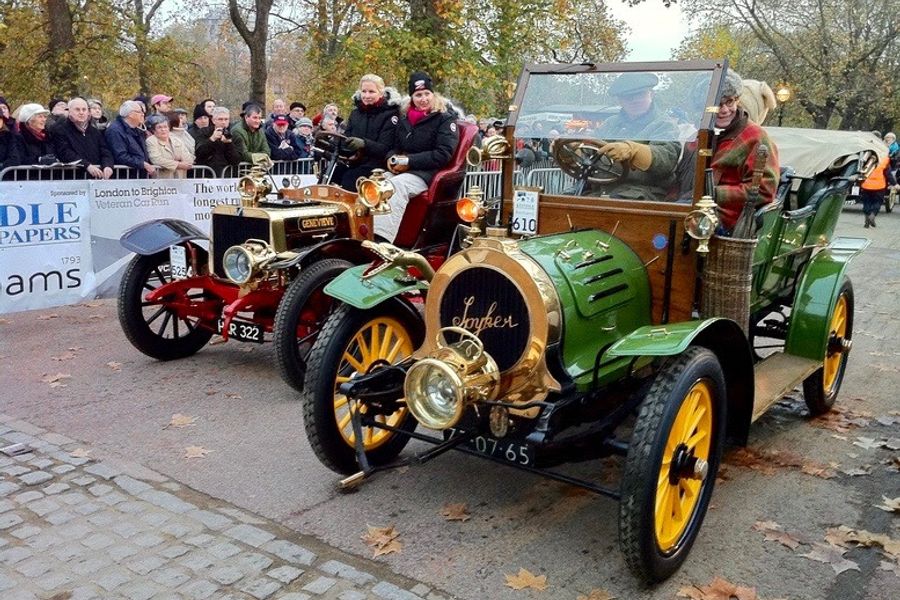
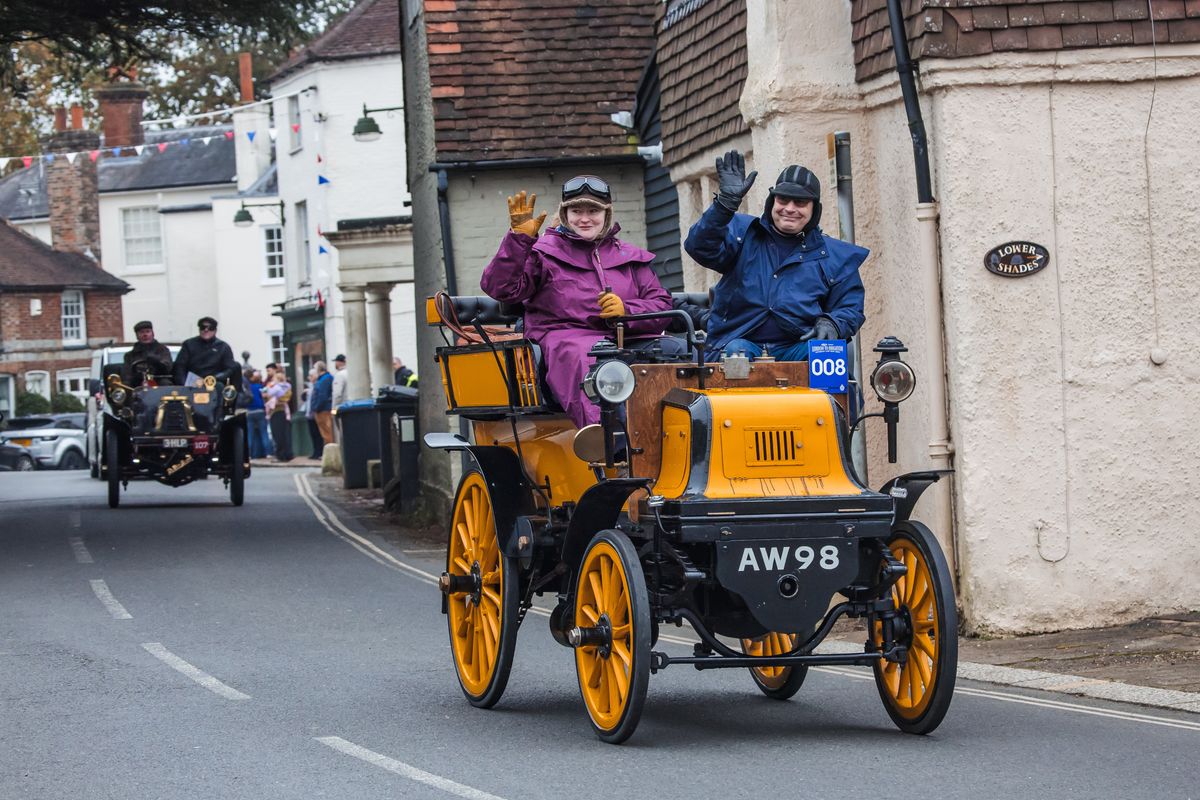
Although AD 1897 is only being displayed at the Spectacle, a number of significant early Daimlers will be among the more than 400 pioneering vehicles participating in the following day’s RM Sotheby’s London to Brighton Run, which leaves Hyde Park at dawn. Among these is the 1903 Tonneau (photo: below bottom), kindly loaned to the Royal Automobile Club by the Jaguar Daimler Heritage Trust as well as a pair of Daimler Wagonettes which followed closely behind the Phaetons later in 1897 (photos: below middle).
“Daimler’s story is woven into the very fabric of Britain’s motoring history and, importantly, into the history of the Royal Automobile Club itself,” said Duncan Wiltshire, Chairman of the Royal Automobile Club.
“Marking the company’s 130th anniversary with such an extraordinarily significant early Daimler outside our Clubhouse on Pall Mall is a wonderful opportunity to celebrate that shared heritage. It also provides a fascinating reminder of just how quickly the motor car developed from an experimental curiosity into an industry that would transform Britain and the world.”
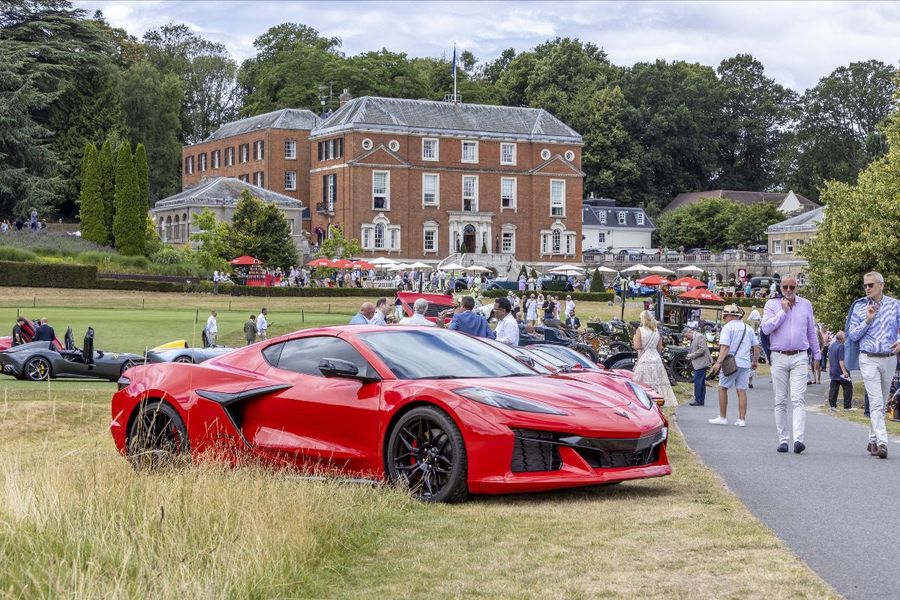
The St James’s Motoring Spectacle will take place from 10.00am until 3.00pm on Saturday 31 October and will be one of the highlights of the Royal Automobile Club’s busy London Motor Week – a week filled with anniversary dinners, awards presentations and the Art of Motoring Exhibition.
RM Sotheby’s London auction is another cornerstone of London Motor Week and has become the definitive fixture on the UK car collector calendar. Returning to the exquisite setting of The Peninsula London, the sale stands as the country’s flagship automotive auction – renowned for its atmosphere, quality and exceptional consignments.
The celebrations culminate on Sunday (1 November) when more than 400 veteran cars depart Hyde Park at daybreak for the 2026 RM Sotheby’s London to Brighton Veteran Car Run.