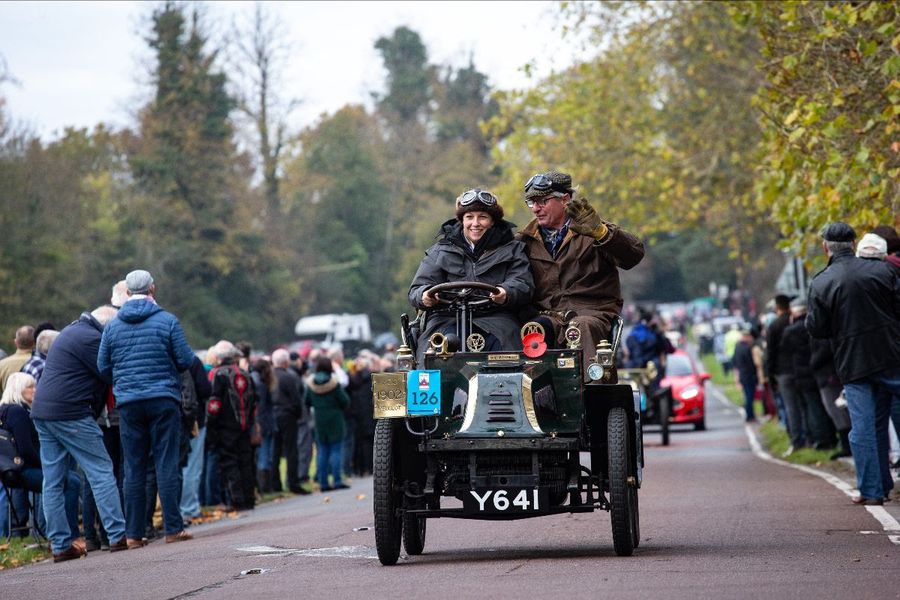









The world’s longest-running motoring event celebrates the 125th anniversary of the 1000 Mile Trial with a huge entry of pioneering vehicles
Little more than a week after the UK clocks go back by an hour, the Royal Automobile Club will once again turn back time by more than 120 years with its annual world-famous RM Sotheby’s London to Brighton Veteran Car Run on Sunday, 2 November.
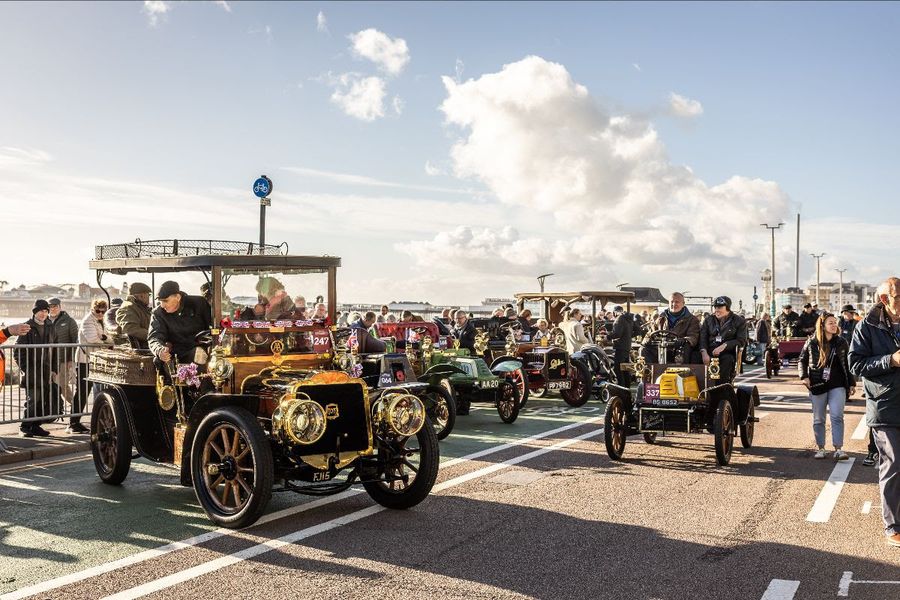
This year’s journey from capital to coast promises to be particularly special, featuring the largest entry of pioneering pre-1905 vehicles in recent years. In total, more than 400 ‘horseless carriages’ will be joined by four veteran motorcycles and 25 veteran bicycles from the same period – including a few crowd-pleasing penny farthings.
All entrants will gather before sunrise in London’s Hyde Park for the symbolic tearing-up of the red flag and the traditional dawn start, which this year will take place from South Carriage Drive rather than Serpentine Road.
This long-established ritual – which first heralded motoring freedom in the Victorian era – will pay tribute to the 125th anniversary of the 1000 Mile Trial of 1900.
Organised by the Automobile Club of Great Britain and Ireland (which became the Royal Automobile Club in 1907), this ground-breaking test of mechanical robustness was a pivotal moment for the UK motor industry.
It took 83 intrepid early motorists on a nationwide route from London and back via Bristol, Birmingham, Manchester, Derby, Kendal, Carlisle, Edinburgh, Newcastle, Leeds, Sheffield and Nottingham.
The 1000 Mile Trial introduced the benefits of these new machines to a countrywide audience. For many, it was their first ever sight of a moving car.
Now, 125 years later, one of the original cars that took part in the 1000 Mile Trial — an 1899 Wolseley 3.5hp Voiturette – will lead the pack away from Hyde Park as the sun rises. Affectionately known as OWL from its registration plate, the Wolseley is part of the collection at the British Motor Museum, Gaydon, and will be driven by racing driver and broadcaster Alex Brundle alongside presenter Charlotte Vowden.
Behind them, an evocative field of three- and four-wheelers will head south through Wellington Arch. While the majority of the pre-1905 pioneers are petrol-driven, there will also be examples powered by steam and even some early electric vehicles.
Many of these veterans now run – very happily – on ‘green’ sustainable biofuels. Indeed, all four of the Royal Automobile Club’s entries will be powered by a drop-in biofuel provided by SUSTAIN.
Some of the 100+ marques represented – such as Chevrolet, Ford, Peugeot, Mercedes and Renault – remain familiar names today. Others, like Mors, Berliet, De Dion Bouton, Napier, Thornycroft and Gladiator belong to motoring history.
The oldest car lining up in Hyde Park – and one of the first to depart – is a single-cylinder Benz built in 1894, entered by Hermann Layher from Germany. It is among more than 100 overseas entries, with participants travelling from as far afield as Australia, Hong Kong, Canada and the United States.
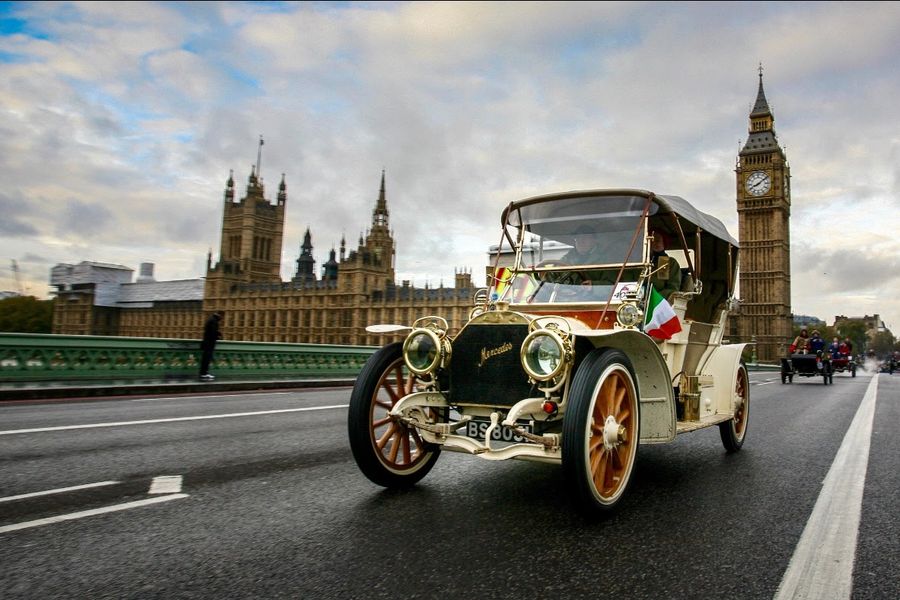
Among these international participants are two notable entries from Mercedes-Benz Heritage. Marking 100 years since Daimler and Benz merged to form Mercedes-Benz in 1926, a 1901 Benz Spider and a 1904 Mercedes Simplex are taking part.
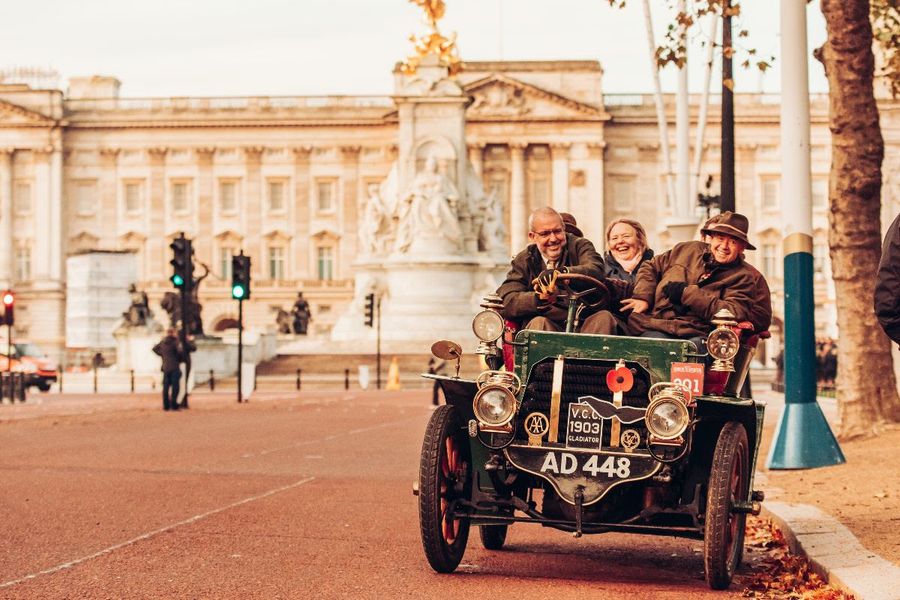
From Hyde Park, the traditional starting point since 1936, the veterans proceed down Constitution Hill, past Buckingham Palace, and on to The Mall before the route divides. Some make their way under Admiralty Arch into Trafalgar Square, then turn on to Whitehall, passing The Cenotaph towards Parliament Square. Others reach Parliament Square via Horse Guards Road.
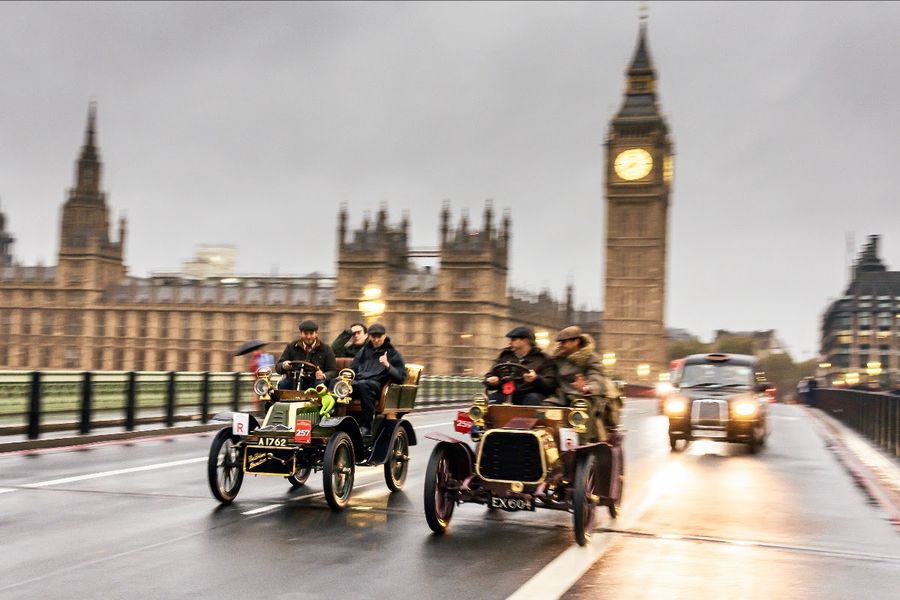
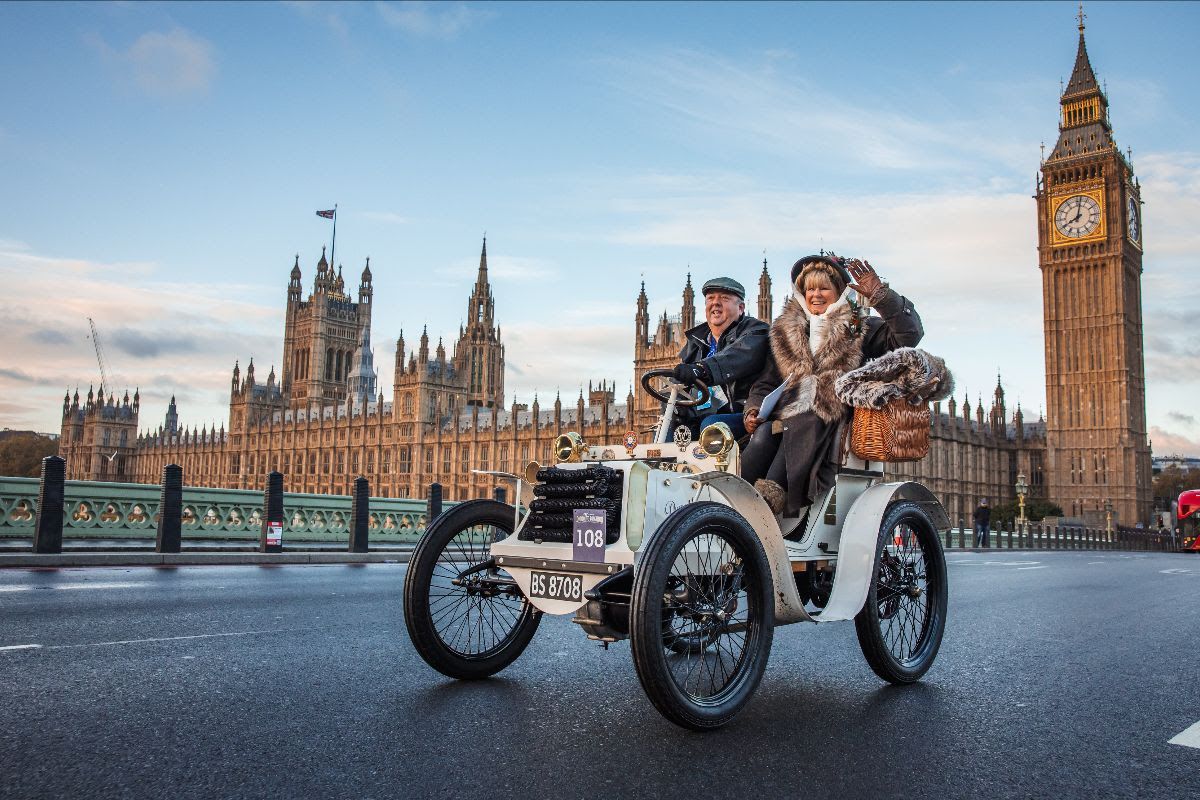
Once the routes merge, the veterans pass Big Ben and the Houses of Parliament – where, 129 years ago, the Locomotives on the Highway Act was passed. This Act raised the speed limit for ‘light locomotives’ from 4mph to 14mph and abolished the requirement for vehicles to be preceded by a man carrying a red flag.
The passing of the Act was celebrated by the first ‘Emancipation Run’ on 14 November 1896, when 30 cars travelled from London to Brighton – the very journey commemorated by today’s event.
After crossing Westminster Bridge, the 60-mile route divides again: half the participants take the traditional A23 route via Kennington, Brixton and Streatham, while the others travel along Albert Embankment before heading across Clapham Common, and then through Tooting and Mitcham.
The two routes reunite on the A236 north of Croydon, and all cars continue south through Surrey towards Crawley, where they reach the official halfway halt at The Hawth Theatre.
Although there is no public access to the CARS-supported Pit Stop at The Hawth, spectators in Crawley can enjoy excellent viewing opportunities along the town’s Boulevard.
After a brief rest, the crews and cars continue across the scenic South Downs towards the finish line on Brighton’s Madeira Drive. The first vehicles are expected to arrive shortly after 10.00am. To earn a coveted finisher’s medal, participants must reach the seafront before the 4.30pm dusk curfew.
The Run is not a race, and there are no prizes for the first car to reach Brighton.
Aside from the paddocks at Hyde Park and Madeira Drive, the organisers have suggested the following locations as excellent viewing points:
6:45am Ceremonial Tearing of Red Flag, Hyde Park, London
7:00am The Start, Hyde Park, London
7:00am – 8:45am Constitution Hill, London
7:00am – 8:45am The Mall, London
7:10am – 9:00am Whitehall, London
7:10am – 9:00am Westminster Bridge, London
7:10am – 9:00am Lambeth Palace, London
7:20am – 9:20am Clapham Common, London
7:25am – 9:50am Mitcham, London
7:35am – 11:05am Coulsdon High Street, London
7:40am – 11:05am Merstham, Surrey
7:55am – 11:35am Redhill, Surrey
8:10am – 2:00pm The Boulevard, Crawley, West Sussex
8:25am – 2:10pm Handcross High Street, West Sussex
8:30am – 2:25pm Staplefield village, West Sussex
8:50am – 2:35pm Cuckfield High Street, West Sussex
10:00pm – 4:30pm Brighton, West Sussex
“The magical RM Sotheby’s London to Brighton Veteran Car Run is a truly great British tradition,” said Duncan Wiltshire, Chairman of the Royal Automobile Club. “Now in its 129th year, it is an extraordinary showcase celebrating the introduction of motorised transport, and the pleasures and freedoms this pioneering technology brought.
“The 1000 Mile Trial we are honouring this year played a significant role in putting both the joys and the practicalities of motoring on the map. We must pay tribute to the British Motor Museum not only for curating the original Wolseley from that event but also for its enthusiastic support this year.
“Most of all, I would like to thank all our participants and partners. Only their incredible enthusiasm makes this unique occasion possible, and creates an extraordinary experience for everyone involved.”
The Run forms part of the Royal Automobile Club’s London Motor Week – a seven-day celebration of all things motoring, including the Motoring Lectures, the 12th Anniversary Motoring Book of the Year Awards, and the Art of Motoring Exhibition, held at the Iconic Images Gallery, just moments from Pall Mall.
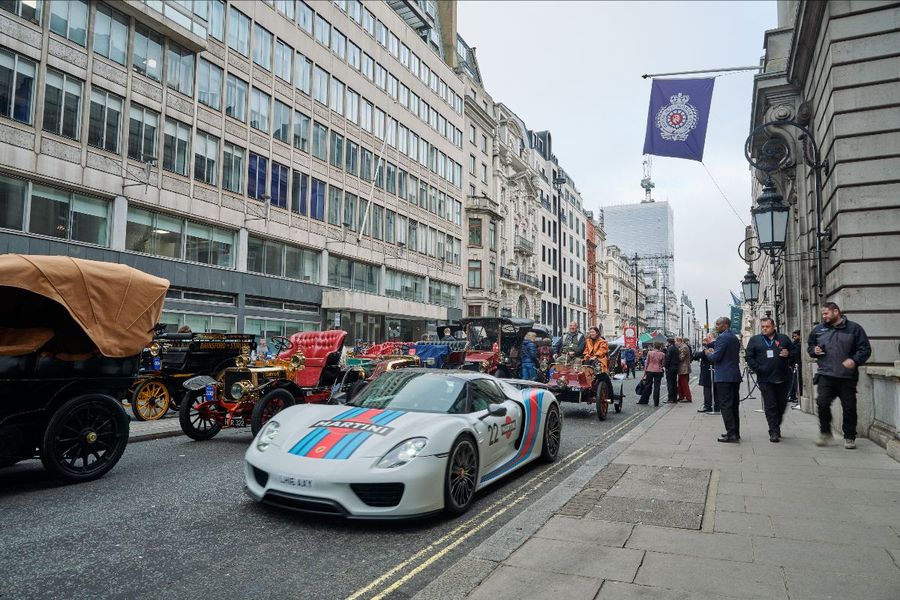
Two further highlights, both taking place on Saturday, 1 November, the eve of the Run, are the prestigious RM Sotheby’s London Sale and the exciting, free-to-view St James’s Motoring Spectacle. The former will be held at the five-star Peninsula London hotel in Grosvenor Place, while the latter unfolds directly outside the Royal Automobile Club’s Pall Mall clubhouse, which will be closed to through-traffic for the duration.