












United States Grand Prix at IndianapolisBlack magicAfter a year of abstinence in Formula 1, when a set of tyres had to lastfor both qualifying and the race and a change was only permitted in anemergency, drivers can now make the most of their tyres’ performanceagain. In 2006, Formula 1 tyres are still a crucial factor in decidingbetween victory and defeat; performing with magical prowess whilesubjected to extreme loads.By returning to the old tyre regulations – and so more frequent pit stops –Formula 1 has not only become more interesting but also safer. Now, thedrivers are no longer tempted to continue driving on worn or damaged tyresand, in the worst-case scenario, risking an accident simply to avoid losing timewith an unscheduled tyre change. But the new regulation is not carte blanchefor the drivers.
“It’s true that we can drive a bit more aggressively again,” saysMark Webber, WilliamsF1 driver, “but of course we still have to make sure thatwe last the distance with the tyres.”
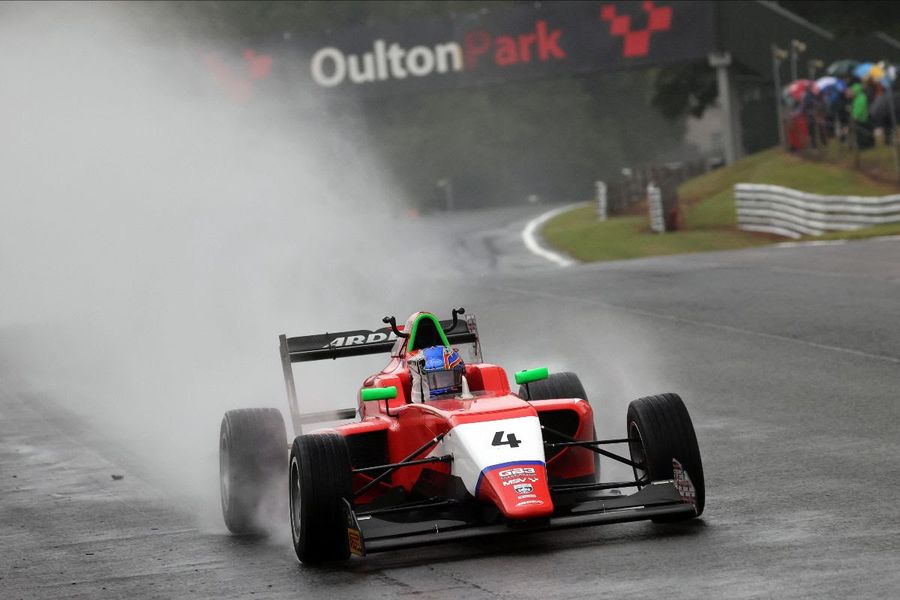
The first thing the teams must sort out – before worrying about race strategy –is their tyres. Given the range that is permitted by the tyre clauses in theFormula 1 regulations, they are really spoiled for choice. For a grand prixweekend, no less than seven sets of dry weather tyres are available for thedrivers, plus four sets of wet weather tyres and three sets of so-calledmonsoon tyres, which guarantee the necessary safety, even if the track iswaterlogged by a sudden downpour.
The WilliamsF1 tyre partner, Bridgestone, will produce about 60,000 tyres for its teams this year, and brings 1,200 tyres to the track for every grand prix.Choosing the right tyres is an art in itself. Picking the wrong type can ruin adriver’s chances completely. During free practice on the Friday prior to therace, they have to find out which tyre compound is required on a particulartrack, and which best suits the car and the planned strategy. They then haveto decide before qualifying, which compound they will use for the rest of thegrand prix weekend.As a normal car driver, too, it is easy to be overwhelmed when buying tyres.
“You should certainly consult a specialist dealer and observe a few basic rules,” recommends Dr.Christoph Lauterwasser from the Allianz Centre for Technology (AZT). First of all, you should comply with the specifications regarding the speed category, the size and the load index. You should also pay attention to the DOT code, which shows the production date ofthe tyre.
“If you try to save money on tyres, you’re cutting corners in the wrong place. Oneshould also always avoid a combination of summer and winter tyres. A mixture of tyres likethat can lead to uncontrollable handling,” adds Lauterwasser.In contrast to everyday traffic, the tyres in Formula 1 are subjected to extreme pressure.The cars accelerate from 0 to 100km/h in 2.6 seconds. The rear tyres have to give the700HP car enough grip on the tarmac to ensure the wheels do not spin when accelerating.The front tyres, on the other hand, do all the hard work during braking. Statistically, givenfull braking from 200km/h, a Formula 1 car comes to rest within 55 metres, and the resultingbraking forces apply a staggering 2.5 tonnes to the tyres in a longitudinal direction. Theload is even higher in corners, where the tyres have to withstand lateral acceleration forcesequivalent to about 2.2 tonnes with centrifugal forces of up to 3.2G. Even when driving in astraight line, unbelievable forces are applied to the tyres by the downforce generated by thewings. When the drivers are racing at 320km/h, the wings press the car down with a load of1.6 tonnes at the rear and 1.1 tonnes at the front. The downforce from the wings is so greatthat, in theory, a Formula 1 car, with a medium wing setting could drive upside down on theceiling at a speed above just 150km/h.The rubber compound of a Formula 1 tyre works optimally in a range from 70 to 95°C. If thetyres are cooler, they cannot develop enough grip and if they become hotter, they wear outtoo quickly. In the worst-case scenario, they develop blisters, which could lead to the tyrebursting. To prevent that, the tyres –consisting of about 80 types of rubber and 250 otheradditives such as oils, steel, sulphur, zinc, polyester, resin and silicic acid – are subjected tostrict quality checks at the factory.It was also a novelty in Formula 1 history when a tyre manufacturer advised that its teamsduring the United States Grand Prix in 2005, to withdrew from the start for safety reasons atthe. With just six cars, the race was disappointing for viewers in sporting terms, but alsoproof that the motto “safety first” stands above all other interests in Formula 1.Allianz Safety Check: Indianapolis Motor Speedway- by Mark Webber, WilliamsF1 driver:“There is a lack of harmony at this track. The extremely long straight and the windy infielddo not fit together very well. We drive at full throttle for almost 25 seconds on the bankedcorner, and the fact that on the left there is a concrete wall instead of a run-off zone doesnot exactly give you a reassuring feeling. In my opinion, you definitely need gravel traps atsome points, which are missing. One important safety factor is the so-called soft walls,which absorb part of the