









Rupert Banner, senior specialist at Gooding Christie’s, chooses eight of the most desirable cars ever produced by Ferrari — one from every decade of the company’s illustrious history
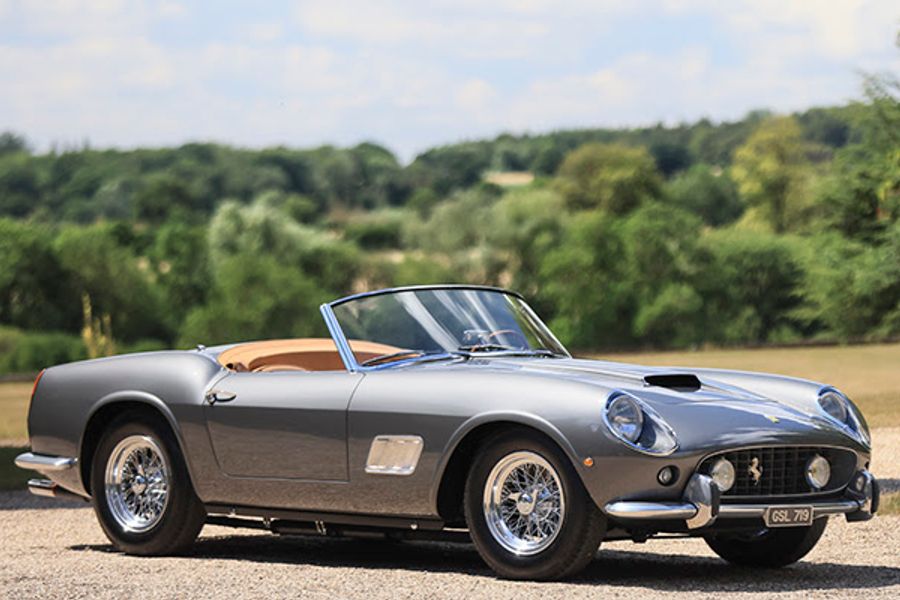
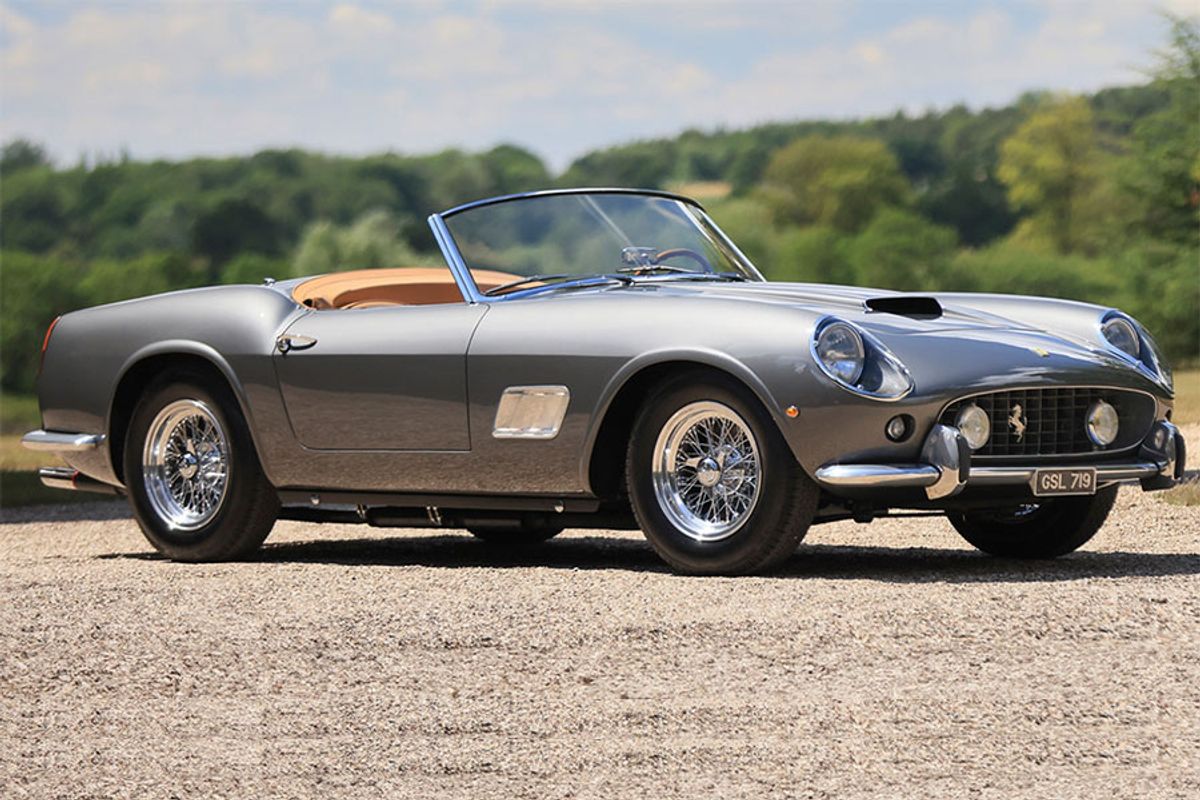
1961 Ferrari 250 GT SWB California Spider Competizione, coachwork by Scaglietti. Sold for $25,305,000 in August 2025 by Gooding Christie’s at Pebble Beach, California (image)
It started with a vision to build cars that would conquer the racetrack. But when Enzo Ferrari — the former manager of Alfa Romeo’s successful racing team — founded his eponymous car-manufacturing business in 1947, he knew that, like his competitors on the circuit, he would also have to sell road-legal cars in order to fuel his grand plans.
Unlike Ford or Mercedes, however, Ferrari decided to use the same factory in the hills of Maranello, Italy, to build all the cars — which shared similar ingredients whether destined for the circuit or the streets.
His business model proved to be a perfect circle: every time Ferrari’s racing division won a trophy, awareness rose and the public placed more orders. The profits from those sales paid for more development, which in turn accelerated performance on the track.
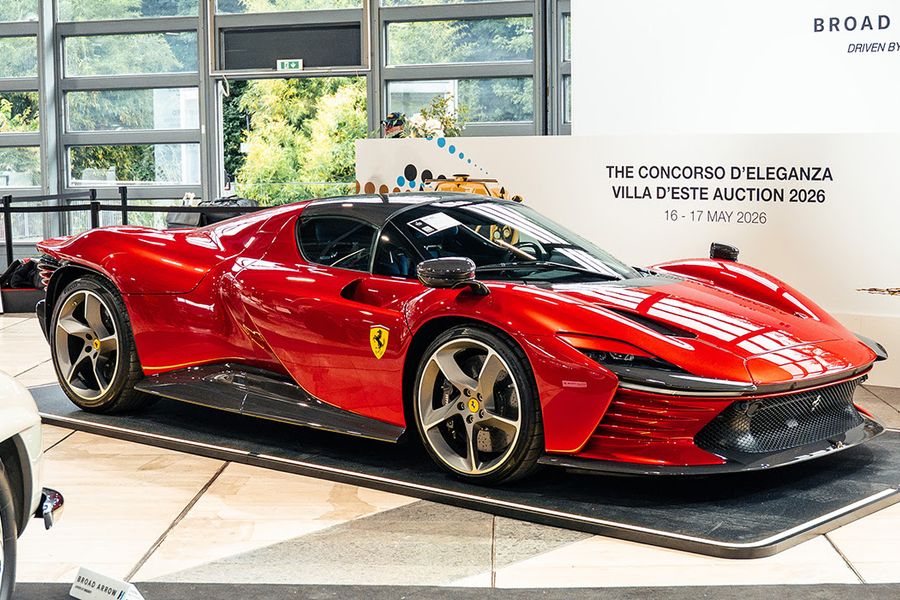
It’s a concept that still holds true today. And despite the fact that Ferrari has only ever sold about 330,000 cars, demand is higher than ever. As of April 2026, Ferraris account for 12 of the 15 most expensive cars ever sold at auction.
Gooding Christie’s set one of those records in 2025, selling a 1961 Ferrari 250 GT SWB California Spider Competizione for $25,305,000. Here, Rupert Banner, a senior specialist on the team, provides a guide to collectable Ferraris, selecting the most iconic cars from each decade and highlighting what drives their demand, from heritage to innovation and rarity.
The 1950s: racing’s golden era
By the end of the 1950s, Ferrari had risen from practically nowhere to dominate motor racing, winning the 24 Hours of Le Mans twice, the World Sportscar Championship five times and the Mille Miglia six times, as well as claiming no fewer than four Formula 1 World Championship titles.
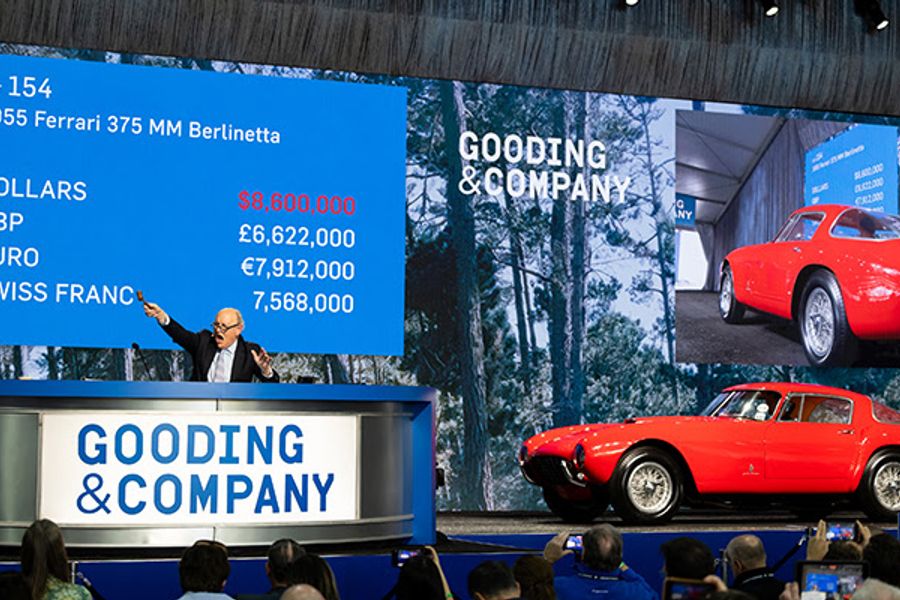
The 375 MM Berlinetta infused this new racing pedigree into a road-going car, explains Banner. ‘It’s got a 4.5-litre engine — and they don’t get a whole lot bigger than that — so you’d need to be a very capable driver to handle it. Add in the brutish styling by Ferrari’s great collaborator Pininfarina, creating a look that came to define the brand, and you’ve got a serious machine. It did great things for Ferrari’s recognition.’
1955 Ferrari 375 MM Berlinetta, coachwork by Pininfarina. Sold for $9,465,000 in March 2025 by Gooding Christie’s at Amelia Island, Florida
This particular example was offered in 2025 with exceptional provenance: custom-built for one of Ferrari’s top clients, it was awarded First in Class at the 1956 Pebble Beach Concours d’Elégance. At auction it made $9,465,000. ‘This car had it all — wonderful and simple provenance, untarnished by anything that might have happened to it in a racing career,’ explains Banner. ‘Cars that have been hidden from view for decades can also demand a premium.’
The 1960s: iconic grand tourers
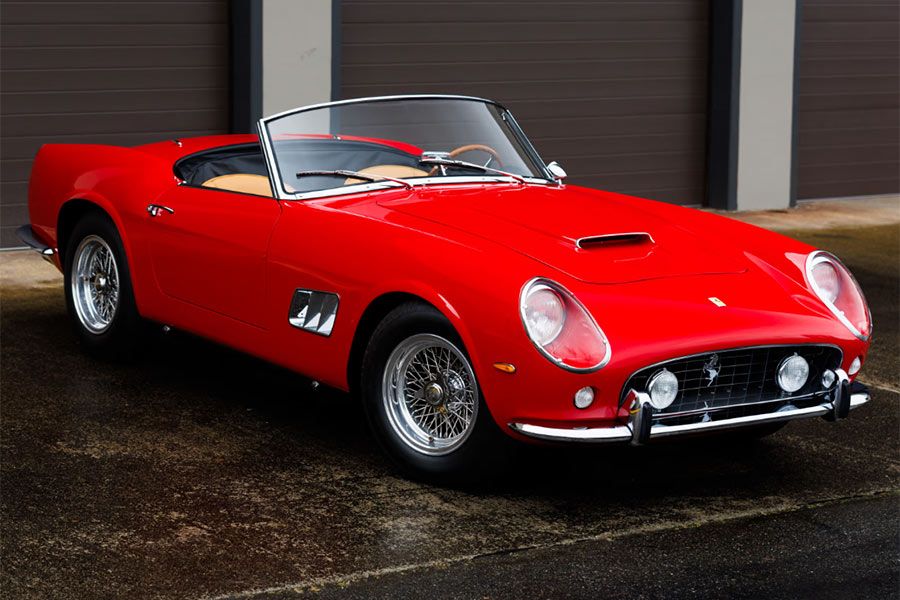
‘As the name suggests, the 250 GT California Spider represents Ferrari’s recognition of the importance of the American market,’ says Banner. ‘Like the Mercedes 300 SL Roadster, or the Porsche Speedster, this is Ferrari’s attempt to create a more approachable car. It’s got an open top, two seats, a V12 engine, and incredibly elegant styling. It doesn’t grab attention by being ferocious, but by being graceful. It really is one of the most beautiful cars ever made.’
1960 Ferrari 250 GT SWB California Spider, coachwork by Scaglietti. Sold for $16,505,000 in March 2026 by Gooding Christie’s at Amelia Island, Florida
The 250 GT has become Ferrari’s most coveted model, representing five of the top seven prices ever paid at auction for any car. ‘Another factor in its appeal is its starring role in the 1986 film Ferris Bueller’s Day Off. A generation grew up in love with this car,’ adds Banner.
This 250 GT was offered with a Classiche Red Book, a certificate of authenticity issued by Ferrari to confirm that the car is in its original condition — a huge draw for collectors. ‘It’s fairly common for racing cars to have had hard lives,’ says Banner. ‘But for road cars, generally, the closer it is to how it left the factory, the better.’ In March 2026, it fetched $16,505,000.
The 1970s: mid-engined machines
Towards the end of the 1960s, Ferrari introduced its first mid-engined road car. It was named after Enzo’s son Alfredo — or ‘Dino’ — an engineer who died aged just 24. ‘These cars represent a complete conceptual shift,’ Banner explains. ‘Until then, Ferraris had V12 engines, up front. The Dino was a V6 car, with the engine behind the driver, which gives a completely different — but very enjoyable — driving experience.’
Recently, the Dino’s popularity has soared. ‘It’s not always easy to find somewhere appropriate to drive a big V12, whereas V6s are great on country lanes, handling beautifully. They are an essential part of the Ferrari family.’
1974 Ferrari Dino 246 GTS, coachwork by Scaglietti. Sold for $1,325,000 in March 2026 by Gooding Christie’s at Amelia Island, Florida
Setting a new world record for the model. It’s the only Dino originally painted in ‘signal orange’, a Porsche colour in fact.
‘Rossa Corsa (racing red) was the mandatory national racing colour for Italian cars in the early 20th century, and became Ferrari’s signature tone. It’s iconic, but also the most prevalent colour,’ says Banner. ‘Much rarer original colours, particularly if few were built in those hues, can command a premium.’
The 1980s: dawn of the supercar
In 1984, Ferrari unveiled the 288 GTO. Combining the pinnacle of turbocharged technology and engineering with advanced materials and low production numbers — just 272 were ever made — it’s considered the first modern supercar.
‘Ferrari 288 GTOs weren’t always bought by people who were skilled or careful drivers, and many enjoyed too the extremes of their performance, unsurprisingly leading to incidents on road or track,’ says Banner. ‘When you find one in original condition, with its original paint and interior finishes, it makes a real difference to price.’
1984 Ferrari 288 GTO, coachwork by Scaglietti. Sold for €9,117,500 in January 2026 by Gooding Christie’s at Rétromobile in Paris
With just two previous owners and only about 1,500km on the clock. It fetched €9,117,500. ‘With such pristine cars, the owner will sometimes have a second example for daily driving, so that they can keep the prime version in museum condition,’ says Banner.
The 1990s: the Schumacher era
‘There is a huge demand for cars of this era right now, as a generation who grew up watching Michael Schumacher’s rise on the track, and with posters of Ferraris on their walls, enter the market,’ says Banner.
The decade’s icon is the F40, which distilled Ferrari’s racing ethos into a road-legal format, and was the first production car to breach 200 miles per hour. ‘It was close in concept to the 288 GTO, but stylistically it looked like nothing that had ever come before. It was a like a spaceship had landed. They’re very special things, and they really resonate today.’
1990 Ferrari F40, coachwork by Scaglietti. Sold for $3,800,000 in August 2025 by Gooding Christie’s at Pebble Beach, California
Created to celebrate the business’s 40th anniversary, the F40 was the last car personally approved by Enzo Ferrari before his death. Some 1,300 were made, around 200 of which were created for the American market, and these tend to dominate the top end of prices today. ‘Generally, they stayed in the country, which makes tracing their lineage — and proving how well they were looked after — much easier,’ says Banner.
This F40, which was originally sold through a dealership in Fort Lauderdale, Florida, even retained its original tool kit. ‘Collectors look for the most complete package of a car, from history to accessories,’ says Banner. Sold in August 2025, it made $3,800,000.
The 2000s: the modern supercar
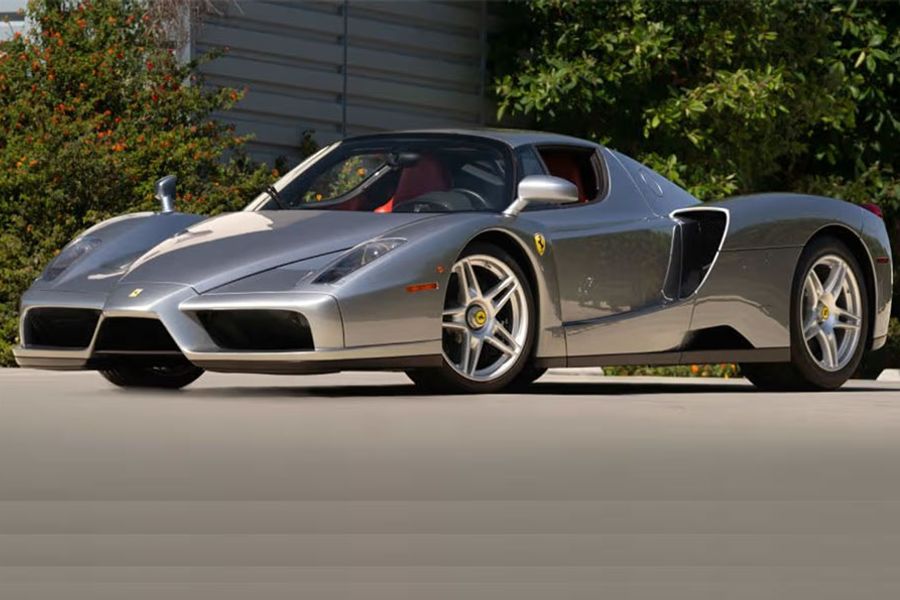
Just as Schumacher was halfway through winning an unprecedented five back-to-back F1 Championships, Ferrari released the Enzo. Developed using racetrack technology, including carbon fibre and Kevlar, it was as wild inside and out as the F40, but represented a shift in terms of the business’s approach.
2004 Ferrari Enzo, coachwork by Pininfarina. Sold for $4,130,000 in August 2022 by Gooding Christie’s at Pebble Beach, California
‘Production numbers were slashed: only 400 Enzos were ever made,’ explains Banner. ‘Ferrari’s new boss, Luca di Montezemolo, realised they could sell more cars by producing fewer units, using scarcity to drive up demand. You had to be an incredibly important client to be offered the chance to buy an Enzo, and you’d only be offered future models if you didn’t sell it. They were a pioneer of the modern luxury market, utilising purchase history and waitlists, and rewarding brand loyalty.’
Today, the Enzo is considered one of Ferrari’s landmark ‘Big Six’ cars, alongside the 288, F40, F50, LaFerrari and F80. This Enzo was one of just six ever made in the silver colour known as Grigio Titanio. It made $4,130,000 in 2022, a figure that has continued to be eclipsed in recent years.
The 2010s: emergence of the hypercar
In 2005, Ferrari took the relationship between between brand and consumer to a new level with its groundbreaking FXX programme, which offered a handful of top-tier clients the chance to participate in research and development for racing cars.
In 2017, the project unveiled its latest iteration, the FXX K Evo, a track-only hypercar that uses a hybrid engine to achieve over 1,000 horsepower.
2018 Ferrari FXX K Evo. Sold for €6,980,000 in January 2026 by Gooding Christie’s at Rétromobile in Paris
‘This was a completely radical offering, giving collectors a chance to be closer than ever to the Ferrari’s racing family,’ says Banner. ‘Ferrari would build and maintain the cars for clients, and ship them to racetracks around the world for use at exclusive events. It created a new level of inner circle.’
This FXX K Evo was offered in January 2026, consigned by its original owner. One of just 40 ever made, it had never been raced and had less than 100km recorded, all driven by Ferrari’s own technicians. It realised €6,980,000. ‘Collectors understand that these are future icons,’ adds Banner.
The 2020s: collector cars of the future
In 2019, Ferrari began production on the SP1, the first of its ‘Special Project’ cars, which are produced in extremely limited numbers and only offered to a handful of clients. Buyers are also invited to participate in VIP tours with other owners. ‘The SP1 indicates what the next chapter of Ferrari’s evolution — where history, innovation and personalisation intersect — might look like,’ says Banner.
2021 Ferrari Monza SP1. Sold for €2,480,000 in January 2026 by Gooding Christie’s at Rétromobile in Paris
Aesthetically, the SP1 draws heavily on the styling of the 750 Monza, a racing car designed by Dino Ferrari in the 1950s. Customers were encouraged to paint their vehicles in vintage liveries, and this SP1 from 2021, which sold in January 2026 for €2,480,000, was ordered in Rosso Chiaro paint and Cuoio Toscano leather to match the owner’s 1955 Monza 750.
‘The SP1 Ferrari offered something completely radical: a single-seat racing car that required a helmet when driving on the road,’ says Banner. ‘Almost instantly, other manufacturers started to copy it. Yet again, Ferrari had led the way, turning these cars into collectables overnight.’
Text & Image Gooding Christie’s