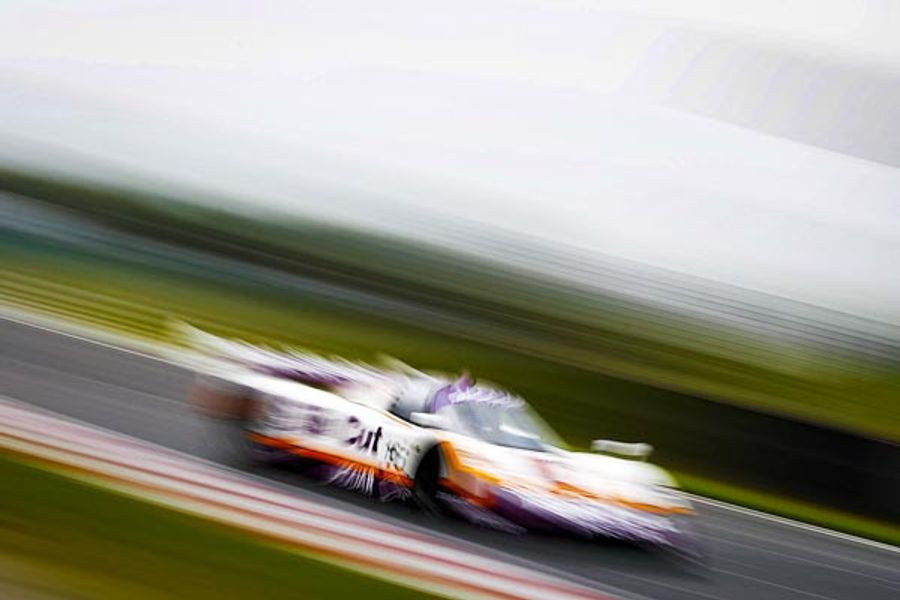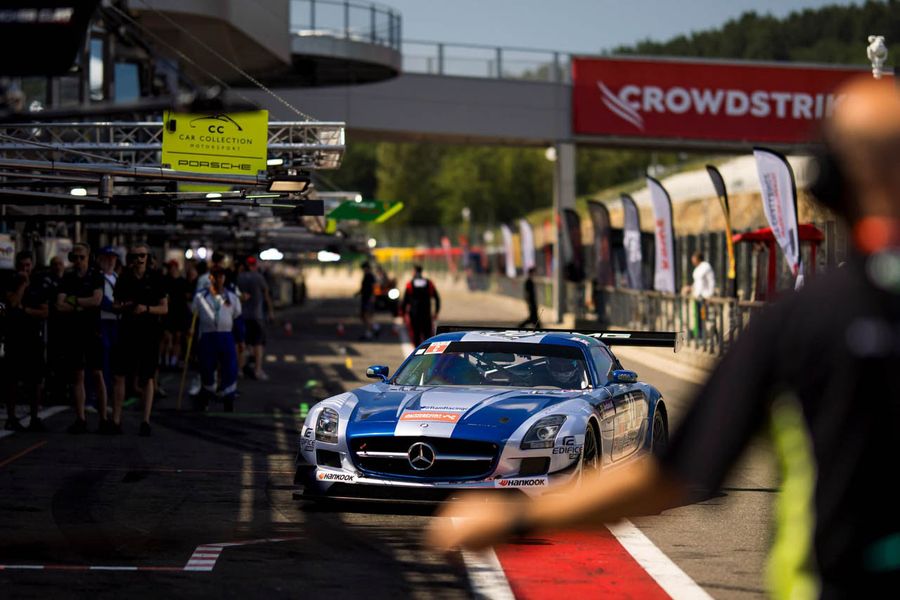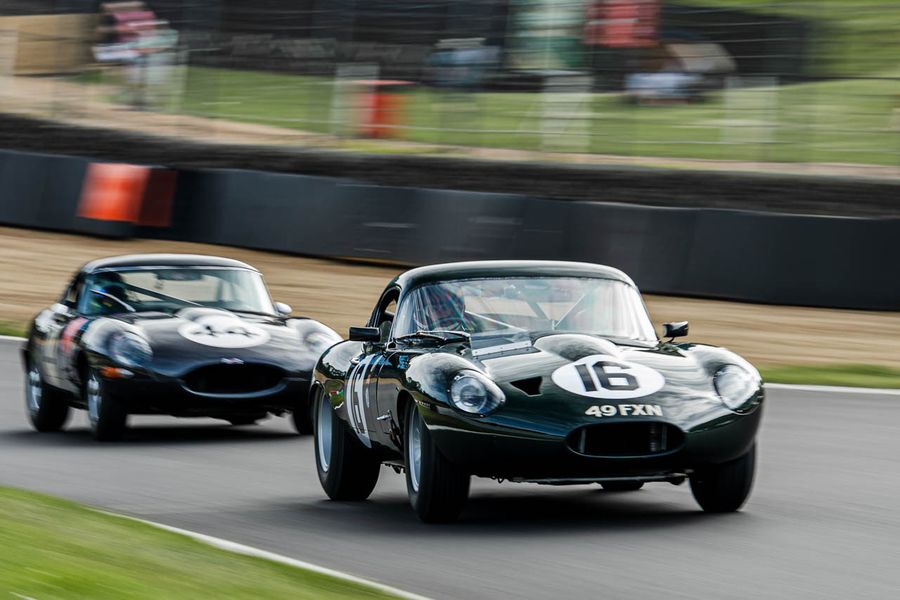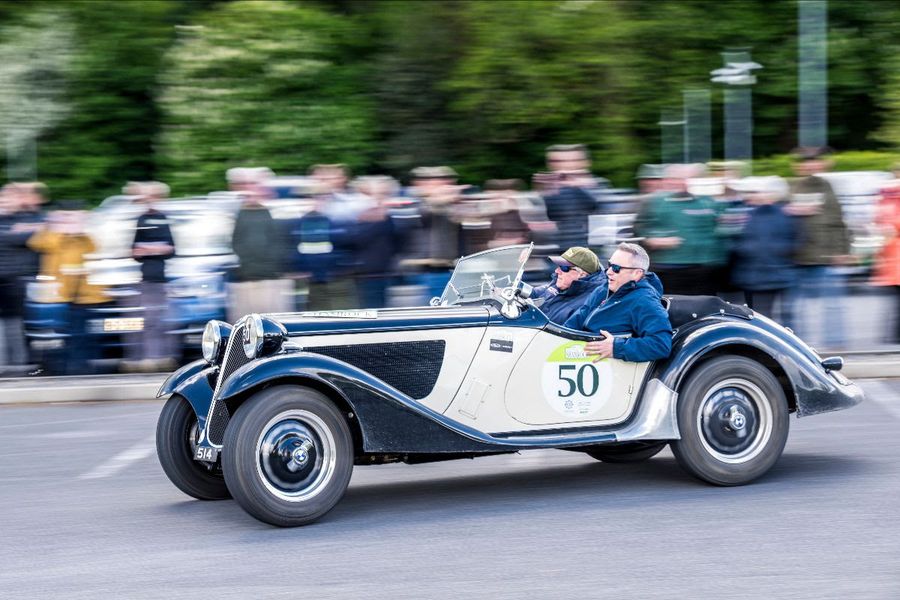









Ford Mustang GT350, BRM P261, Ferrari 250 GT SWB Breadvan, Lola Mk1, Bentley 3-liter.
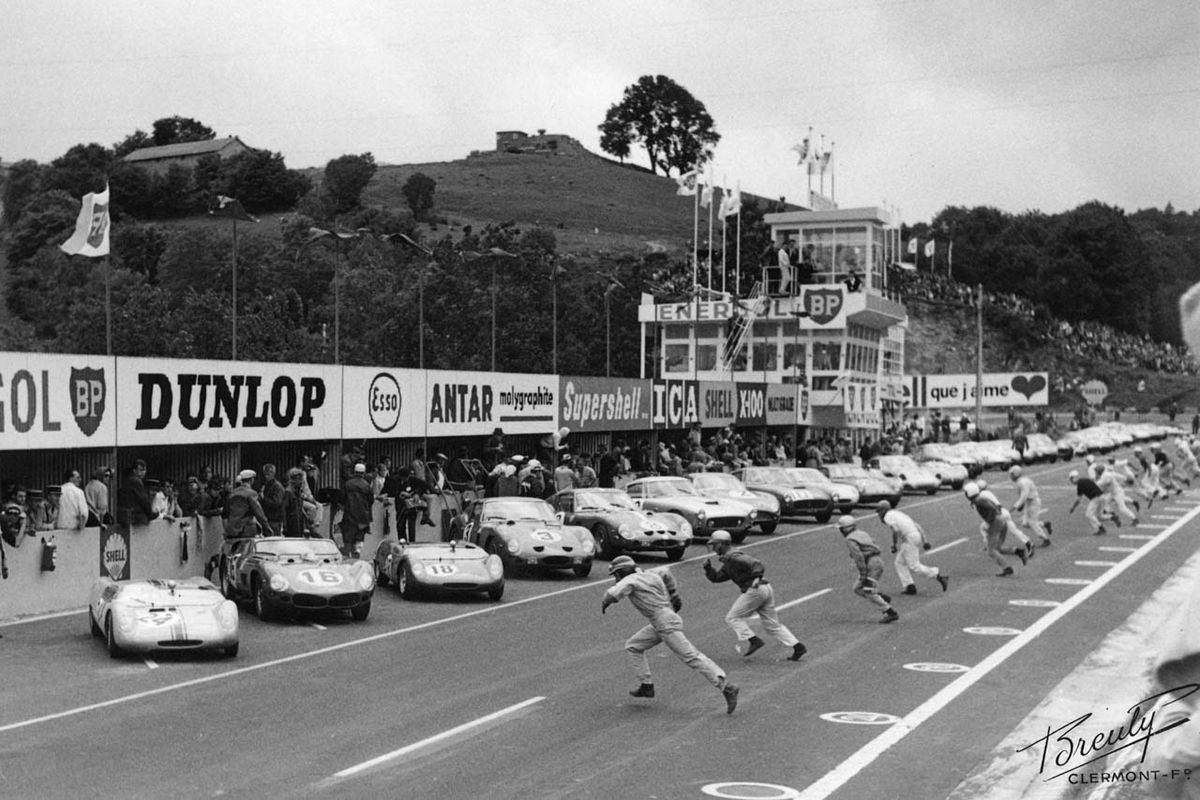
Image: Trophées d'Auvergne 1958 : © Circuit de Charade
From 10th to 12th July, the legendary Trophées d’Auvergne will return to the Charade circuit. Eleven grids will be on track, spanning a broad period from 1928 to 1976 and covering disciplines as diverse as Sports Prototypes, GT, Touring Cars and Formula One. Focus on five cars.
In just over a month, Motor Racing Legends will stage its first event in France, the Trophées d’Auvergne, at the Circuit de Charade. While awaiting the entry lists, which will be published shortly, here is a preview featuring five remarkable cars.
American V8 power will be represented at Charade in several categories. In the Stirling Moss Trophy, Chevrolet iron features in the Lister Knobbly, whilst Ford power features in Pre-’66 GT Sprint. Developed for the SCCA’s B/Production class, the Ford Mustang GT350 R was produced in just 37 examples and featured extensive modifications over the standard Mustang. These included a distinctive fibreglass front apron and a heavily reworked engine producing around 360 horsepower.
The example entered at the Trophées d’Auvergne stands out in its blue livery with white stripes, identical to the car in which Mark Donohue first attracted the attention of Roger Penske. That encounter would later lead to major successes, including victory at the 1972 Indianapolis 500. The blue livery set the Mustang apart from those entered by Shelby, which were white with blue stripes. Donohue raced the GT350 R eight times in 1965, securing four victories.
Jackie Stewart finished second in the first Formula 1 Grand Prix held at Charade in 1965, behind Jim Clark in the Lotus 33. He was driving a BRM P261, an exceptional car built in just six examples. Entered by the factory team and by private outfits through 1968, the BRM P261s scored six victories and twice finished runner-up in the Constructors’ Championship in 1964 and 1965.
The P261-2 chassis presented at the Trophées d’Auvergne is the first of the series, and indeed the manufacturer’s very first monocoque. In the hands of Graham Hill, it notably finished second in the 1964 French Grand Prix at Rouen-les-Essarts. Beyond its results, this car symbolizes a golden age of F1, just before the advent of wings, slick tyres and sponsorship. A small 1.5‑litre V8 is more than enough to set this rolling cigar into a slide, in an incomparable style. An absolute must-see among the some sixty F1 cars on track at the Trophées d’Auvergne.
One of the most distinctive entries at the Trophées d’Auvergne, the Breadvan stands as one of the most striking independent creations in motorsport history. Following the failed Maranello coup in 1961, former Ferrari engineer Giotto Bizzarrini and Count Giovanni Volpi set out to build their own challenger to Ferrari. They acquired a former works 250 GT SWB previously driven by Gendebien, Hill, Trintignant and Scarfiotti, before lowering it, repositioning the engine further back, and fitting a radical Kamm‑tail body.
Built in Modena in just 15 days, the modified car was entered at Le Mans by Volpi’s Scuderia Serenissima. Nicknamed ‘La Camionnette’ in French, and later ‘Breadvan’ by the British press, it was driven by Carlo Maria Abate and Colin Davis. Its superior handling allowed it to outpace the GTOs despite retaining a four‑speed gearbox, before a propshaft failure forced retirement after four hours. The car later won the GT category at Brands Hatch and finished third in the 1962 Montlhéry 1000 km.
Introduced in 1958, the same year the Charade circuit opened, the Lola Mk1 Prototype marked the beginning of Eric Broadley’s career and laid the foundations of the Lola marque. This unique prototype would give rise to 31 further cars, one of which claimed victory in the 1.3‑litre class at the 1960 Trophée d’Auvergne, with Graham Whitehead at the wheel.
Conceived as a direct response to the Lotus Eleven, the Mk1 Prototype features an ideal 50:50 weight distribution. Its very lightweight multi‑tubular chassis — around 28 kg — generates a slight understeer that is perfectly controllable. Powered by a Coventry Climax engine, the prototype was completed on the eve of its first appearance at Brands Hatch, where it immediately demonstrated its potential before securing pole position at the 1958 Tourist Trophy at Goodwood.
The oldest entry in the Trophées d’Auvergne perfectly embodies the engineering philosophy of W. O. Bentley. At its heart lies a remarkably advanced straight‑four engine for its era, featuring an overhead camshaft and four valves per cylinder. Like many pre‑war machines, the Bentley is defined less by outright power than by a strong reserve of torque, encouraging a smooth, momentum‑based driving style that rewards commitment and precision.
At low speeds, the car feels heavy and demanding, with steering that requires significant effort. Once in motion, however, it transforms, revealing a surprisingly direct and engaging character. Despite its weight, a well‑driven example can be coaxed into spectacular, controlled slides. At Charade, the narrow and twisting layout offers spectators a striking view of drivers wrestling with these imposing machines and their large wooden steering wheels.
The Trophées d’Auvergne is going ahead
Despite the recent cancellation of the Charade Super Show by the Circuit de Charade and the restructuring of GCK Group, which manages the circuit, this event is in no way affected.
Motor Racing Legends will be bringing the Trophées d’Auvergne to Charade, on 10th-12th July 2026, as planned. Everyone at Motor Racing Legends is proud to be hosting this event at this unique venue, and proud to be working with the team at Charade, who have been exceptional throughout.