












Next weekend sees the second of this season’s three street circuit races for the FIA World Touring Car Championship, running on Yokohama ADVAN control tyres. However, unlike the first of the three, the Portuguese round, in Porto, is likely to be more unpredictable, since the city streets hadn’t been used as a racetrack for years prior to resurrection in 2005.
Forming part of road network in the city famous as the home of Port wine, the circuit is made up of streets that in daily life are home to cars, buses, taxis and trucks. While it is a new circuit to everyone, one of the few people not fazed by the prospect is Ian Beveridge, Yokohama Motorsport’s Technical Consultant.
Arguably, the Yokohama ADVAN racing tyres will play a crucial part this weekend, as the World Touring Cars will be on the streets just hours after HGVs. Ian explains: “If the race in Porto is anything like it was in Pau, the organisers probably won’t close the streets to form the circuit until a few hours before the day’s session gets underway. And in Pau, they opened the roads between days, closing them around three hours before the cars started running on each day.
“Running racing cars on street circuits, particularly when they were open to road vehicles and trucks just hours before, presents all sorts of issues for the tyres. The first is the general lower amount of grip available to the drivers than if they were competing on a traditional racetrack. Not only does the surface itself provide less grip, it’s also got various deposits and debris on it, such as oil and fuel from large vehicles and so on. However, lower grip does tend to mean that the tyres run at slightly lower temperatures, so from that point of view, they tend to have a slightly easier time than on a normal circuit.
“Another factor is the changing road surface, which means the grip levels change as well. This is something that the drivers have to come to terms with to understand what grip they have available and where they can use the tyres harder and where to back off. But, of course, it will be the same for everyone…”
Another factor which many people don’t consider when thinking about street circuits is the road furniture; kerbs, manhole covers and drains. While the ADVAN slicks will probably have a slightly easier time thanks to lower grip, they will inevitably be put through their paces against the hazards of Porto.
“The organisers will generally do everything they can to ensure that the furniture which is likely to be present on the circuit will have a minimal effect. However, you can never cover every eventuality. But we know that the ADVAN tyres are not only durable and give good performance, they are also extremely robust and I think this should help to minimise the impact damage that is bound to occur.”
Beveridge predicts that even though the ‘circuit’ will start green, a layer of rubber will begin to build-up on the racing line as the weekend develops and with it, progressively more grip. However, he does not expect the teams to alter their tyre strategies greatly. “Every team is always looking for the best grip, so we would recommend each starts with their usual strategy and we will monitor the situation. We would not recommend a sweeping strategy change unless we saw a particular trend emerging across the entire field, perhaps as a result of lower grip not getting the tyres up to the correct temperature.”
Each team will have its usual FIA-regulated three sets of tyres per car, plus a single set of used tyres from a previous outing. They will also get one extra set per car since the circuit is new to the series, to allow the drivers to familiarise themselves with it and achieve a base set-up before fine-tuning each car’s settings.
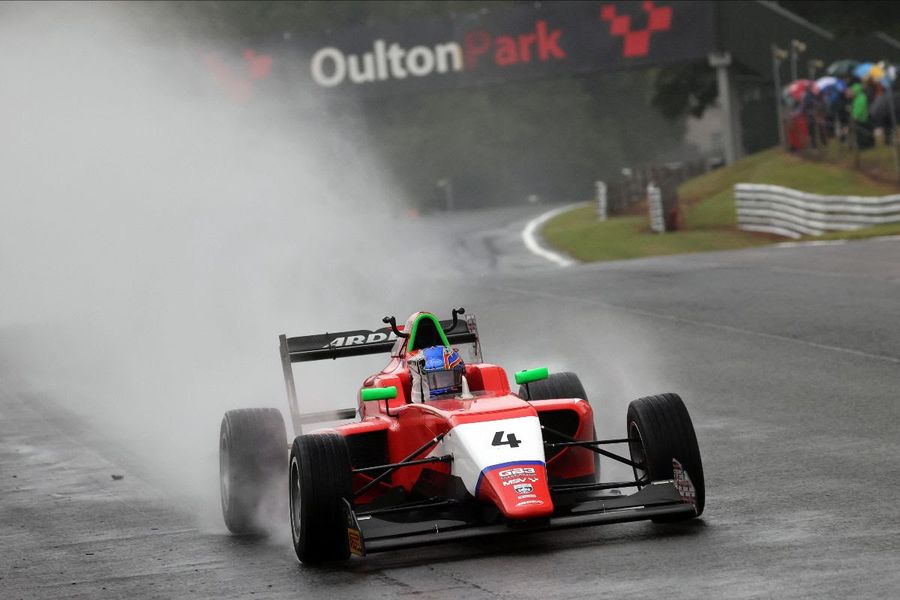
Also on track this weekend is the International Formula Masters single-seater series, which uses Yokohama control tyres. However, as Beveridge explains, these newest racers tend to be softer on their tyres than the WTCars.
“The S2000 cars in the IFM series are far less of a concern from a tyre point of view. They use relatively large tyres, compared with the vehicle weight and don’t generally experience the same amount of stress as the WTCars do. However, the drivers still need to be extremely vigilant to avoid anything which would damage their tyres and upset their result.”